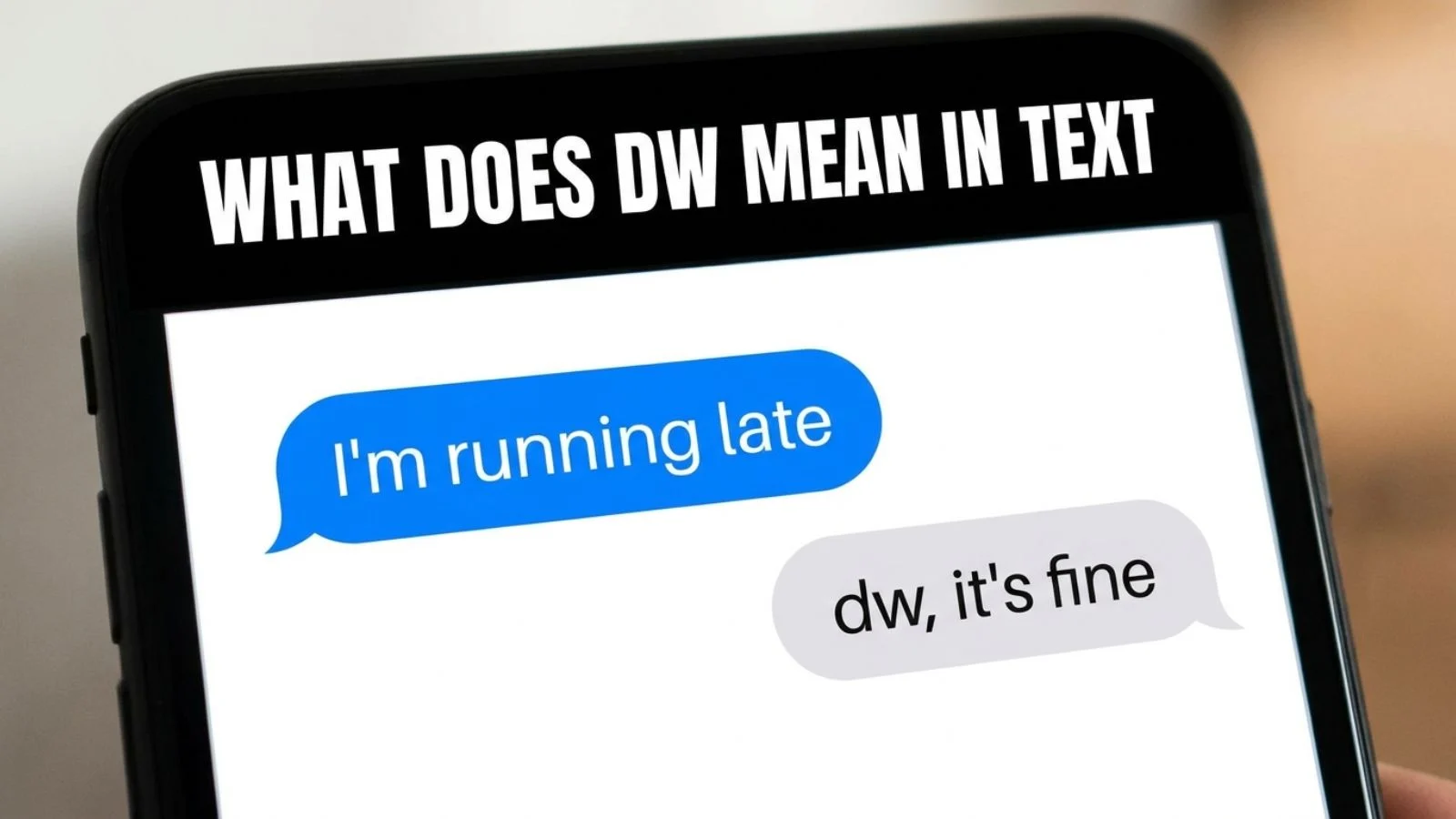
Have you ever received a message that says just “dw” and felt confused?
You pause.
You read it again.
You wonder… Is that good? Bad? Sarcastic?
Don’t worry — you’re not alone.
Text slang moves fast. And if you’re not sure what something means, it can feel awkward to ask. So let’s clear it up once and for all.
In this guide, you’ll learn exactly what does dw mean in text, when to use it, when not to use it, and how to avoid common mistakes.
Let’s break it down in the simplest way possible.
What Does DW Mean in Text?
DW in text means “Don’t Worry.”
That’s it.
It’s a short, casual way to tell someone:
- It’s okay
- No problem
- You’re fine
- Don’t stress about it
It’s commonly used in texting, chats, and social media conversations.
If you’re looking for a quick definition for clarity:
DW means “Don’t worry.” It’s a casual texting abbreviation used to comfort someone or tell them something isn’t a problem.
Simple. Clear. Done.
Now let’s make it even easier to understand.
Simple Meaning (In Everyday Words)
Think of dw as a digital way of saying:
- “It’s all good.”
- “Relax.”
- “No stress.”
- “I’ve got it covered.”
It’s friendly.
It’s informal.
It’s meant to reduce tension.
If your friend says:
“Sorry I replied late.”
You might say:
“dw, it’s fine.”
That’s it.
Where Is DW Used?
You’ll usually see dw in casual conversations online.
Here’s where it commonly appears:
1. Text Messages
Regular phone texting between friends, family, or classmates.
2. Social Media
Instagram DMs
Facebook Messenger
Snapchat
TikTok comments
3. Online Chats
Gaming chats
Discord servers
WhatsApp groups
4. Casual Work Chats
Sometimes used in relaxed workplace conversations (but not in formal emails).
Important note: You won’t usually see “dw” in professional emails or academic writing. It’s informal slang.
Why Do People Use DW?
Good question.
People use dw for three main reasons:
1. It Saves Time
Typing “don’t worry” takes longer.
Typing “dw” is faster.
In fast conversations, speed matters.
2. It Sounds Casual and Friendly
“Don’t worry” can feel slightly formal.
“dw” feels relaxed and modern.
It makes the conversation feel natural.
3. It Reduces Drama
Sometimes people apologize too much.
Instead of writing a long response, “dw” instantly lowers tension.
It’s quick reassurance.
Real-Life Examples of DW in Text
Let’s look at real situations so you fully understand how it works.
Example 1: Late Reply
Friend:
“Sorry I didn’t answer earlier.”
You:
“dw, I know you’re busy.”
Meaning: It’s not a problem.
Example 2: Small Mistake
Coworker:
“I made a small mistake in the document.”
You:
“dw, we can fix it.”
Meaning: Stay calm.
Example 3: Being Late
Friend:
“I’m 10 minutes late.”
You:
“dw, I just got here too.”
Meaning: No stress.
Example 4: Overthinking
Someone:
“I feel like I messed everything up.”
You:
“dw, it’s going to be okay.”
Meaning: Relax. Things are fine.
DW vs Similar Terms
Sometimes people confuse “dw” with other short slang terms. Let’s compare them clearly.
| Term | Meaning | Tone | When Used |
|---|---|---|---|
| DW | Don’t worry | Reassuring | When calming someone |
| NP | No problem | Casual | After someone thanks you |
| NVM | Never mind | Neutral | When canceling something |
| IDC | I don’t care | Can sound rude | When uninterested |
| It’s fine | It’s okay | Neutral | Can be genuine or sarcastic |
Important difference:
- DW = Comforting
- IDC = Indifferent
- NVM = Canceling or dismissing
So choose wisely.
When Should You Use DW?
You can safely use “dw” when:
- Talking to friends
- Messaging siblings
- Chatting with classmates
- Casual online gaming
- Informal team chats
It works best when you want to:
- Calm someone down
- Accept an apology
- Show something isn’t serious
But here’s when you should NOT use it.
When You Should Avoid Using DW
Avoid using “dw” in:
- Formal emails
- Job applications
- Messages to teachers
- Professional business communication
- Serious emotional conversations
Why?
Because sometimes it can sound dismissive.
If someone shares something very serious like:
“I’m really struggling with anxiety.”
Replying with:
“dw”
Can feel cold.
In emotional situations, write something fuller like:
“I understand. I’m here for you.”
Tone matters.
Common Misunderstandings About DW
Let’s clear up some confusion.
1. Does DW Mean “Deal With”?
No.
In texting slang, dw almost always means “don’t worry.”
Context matters, but 99% of the time, it means reassurance.
2. Is DW Rude?
Not usually.
But it can sound rude if:
- You use it during serious conversations
- You type only “dw” with no warmth
- You use it dismissively
Tone in text depends on context.
3. Is DW Romantic?
Not by itself.
But it can feel caring depending on the message.
Example:
“dw, I’ll take care of it.”
That can feel protective or supportive.
4. Is DW Used Worldwide?
Yes.
It’s common in English-speaking texting culture globally.
Young people especially use it often.
How Tone Changes Meaning
This is important.
Text has no voice tone.
So “dw” can feel different depending on the situation.
Compare these:
Friendly:
“dw, I’ve got you.”
Dismissive:
“dw.”
See the difference?
Adding a few extra words makes it warmer.
Pro Tips for Using DW Correctly
If you want to use it naturally, follow these tips.
1. Add Context
Instead of just:
“dw”
Try:
“dw, it’s really not a big deal.”
It feels kinder.
2. Use It With People You Know
It works best with friends and familiar people.
3. Avoid It in Emotional Situations
When someone is upset, be more thoughtful.
Write full sentences.
4. Watch for Sarcasm
Sometimes people say “It’s fine” sarcastically.
“dw” is rarely sarcastic, but tone still matters.
Why Understanding Text Slang Matters
You might think, “It’s just two letters.”
But small misunderstandings in text can:
- Cause confusion
- Create awkwardness
- Change emotional tone
Understanding what dw means in text helps you:
- Reply confidently
- Avoid miscommunication
- Sound natural online
Communication today is fast.
Short forms are normal.
Knowing them keeps you in the loop.
Final Thoughts
So, what does dw mean in text?
It simply means “Don’t worry.”
It’s friendly.
It’s casual.
It’s meant to reassure someone.
Use it when you want to calm someone down or tell them something isn’t a big deal.
Avoid it in formal or emotional conversations.
And remember — context always matters.
Now the next time someone texts you “dw,” you won’t hesitate.
You’ll know exactly what they mean.
FAQ Section
1. What does DW stand for in texting?
DW stands for “Don’t worry.” It’s used to reassure someone that everything is okay.
2. Is DW formal or informal?
DW is informal. It’s best used in casual conversations, not professional emails.
3. Can DW be used in relationships?
Yes. It’s often used to comfort a partner or friend in everyday chats.
4. Is DW the same as “No problem”?
Not exactly. “DW” reassures someone. “No problem” is usually said after someone thanks you.
Discover More Post
