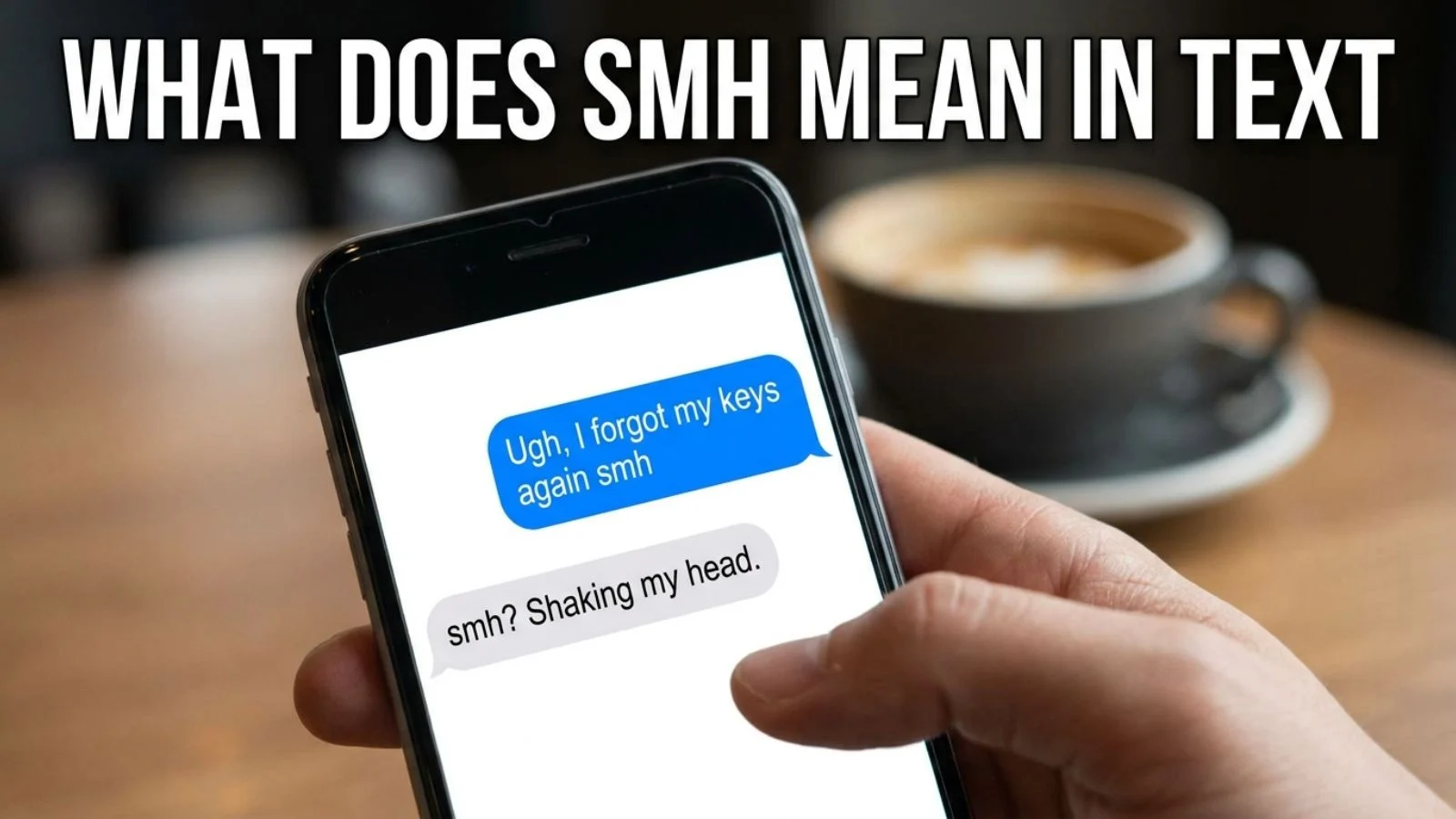
Have you ever received a message that simply said “SMH” and felt confused?
You stare at the screen.
You read it again.
Still no clue what it means.
Don’t worry. You’re not alone.
Text slang moves fast. New shortcuts appear every year. And if you don’t keep up, it can feel like everyone else is speaking a secret code.
So let’s break it down clearly and simply.
What Does SMH Mean in Text?
SMH means “Shaking My Head.”
It is used in text messages and social media to show disappointment, disbelief, frustration, or mild annoyance.
People type SMH when something makes them mentally “shake their head” — like when someone does something silly, frustrating, or unbelievable.
Quick Definition (Featured Snippet Style)
SMH stands for “Shaking My Head.” It is used in texting and online chats to express disappointment, disbelief, frustration, or annoyance about something someone said or did.
Simple, right?
Simple Meaning of SMH
Let’s make it even easier.
When someone says SMH, they are basically saying:
- “I can’t believe this.”
- “This is ridiculous.”
- “That was disappointing.”
- “Wow… really?”
It’s like silently shaking your head in real life — but typing it instead.
No drama.
No long explanation.
Just a short reaction.
Where Is SMH Used?
You’ll see SMH almost everywhere online.
Here are the most common places:
1. Text Messages
Friends use it when reacting to something funny, silly, or annoying.
Example:
“You forgot your wallet again? SMH.”
2. Social Media Platforms
People use it in comments and posts on:
- TikTok
- X (Twitter)
- Snapchat
- YouTube comments
3. Online Gaming Chats
Gamers use SMH when a teammate makes a mistake.
4. Group Chats
It’s common in family and friend group chats when reacting to everyday chaos.
Basically, if people are typing casually, SMH fits right in.
Why Do People Use SMH?
Good question.
Why not just write a full sentence?
Here’s why:
1. It’s Quick
Typing “Shaking my head in disappointment” takes time.
Typing SMH takes one second.
2. It Shows Emotion Fast
It adds feeling to a message without writing a paragraph.
3. It Feels Casual
Text slang makes conversations feel relaxed and friendly.
4. It Avoids Overreaction
Sometimes you don’t want to argue.
You just want to show mild frustration.
SMH does that perfectly.
Real-Life Examples of SMH (With Explanation)
Let’s look at practical examples so you fully understand how it works.
Example 1: Disappointment
“He missed the meeting again. SMH.”
Meaning: The person is disappointed or frustrated.
Example 2: Someone Did Something Silly
“You wore sandals in the snow? SMH.”
Meaning: That decision makes no sense.
Example 3: Mild Annoyance
“The internet stopped working during my exam. SMH.”
Meaning: Frustrating situation.
Example 4: Shock or Disbelief
“They think the earth is flat. SMH.”
Meaning: The speaker finds it ridiculous.
Example 5: Playful Teasing
“You still haven’t watched that movie? SMH.”
Meaning: Light teasing, not serious anger.
Tone matters.
Sometimes SMH is serious.
Sometimes it’s playful.
Context decides.
SMH vs Similar Text Slang
People often confuse SMH with other slang expressions. Here’s a clear comparison:
| Slang | Meaning | Emotion Level | Example |
|---|---|---|---|
| SMH | Shaking my head | Mild frustration or disbelief | “You forgot again? SMH.” |
| OMG | Oh my God | Surprise or shock | “OMG that’s crazy!” |
| LOL | Laughing out loud | Amusement | “That joke was funny LOL.” |
| IDK | I don’t know | Uncertainty | “IDK what happened.” |
| Facepalm | Embarrassment or frustration | Stronger disappointment | “He sent it to the wrong person. Facepalm.” |
SMH is usually less intense than facepalm and less emotional than OMG.
It’s more like a calm reaction of disbelief.
When Should You Use SMH?
You can use SMH when:
- Someone says something unbelievable
- A friend makes a silly mistake
- You feel mild disappointment
- You want to react without starting drama
- You’re joking with someone casually
It works best in informal conversations.
When Should You NOT Use SMH?
There are times when SMH is not appropriate.
Avoid using it:
- In professional emails
- In formal messages
- When someone is sharing serious bad news
- In work-related communication
- When clarity is important
For example, don’t send this to your boss:
“The report wasn’t finished? SMH.”
That won’t end well.
Keep it casual.
Common Misunderstandings About SMH
Many people get confused about SMH. Let’s clear things up.
1. It Does NOT Always Mean Anger
SMH often shows mild frustration, not rage.
It’s usually light.
2. It’s Not Always Serious
Sometimes it’s playful teasing.
Tone depends on context.
3. It’s Not a Compliment
SMH is almost always negative or critical in some way.
If someone sends you SMH, they’re not praising you.
4. It Doesn’t Replace Full Communication
If something serious happened, don’t just say SMH.
Explain clearly.
Is SMH Rude?
It can be.
But it depends on tone and relationship.
With close friends?
Usually harmless.
With coworkers?
Possibly disrespectful.
With strangers online?
It may come across as judgmental.
Before using SMH, ask yourself:
- Could this offend someone?
- Is this the right tone?
- Would a full sentence be better?
Variations of SMH
You might also see:
- SMDH – Shaking my damn head (stronger frustration)
- SMFH – Shaking my freaking head (more intense)
- Smh at you – Directly expressing disappointment toward someone
The added letters increase emotion.
Be careful with stronger versions.
The History of SMH
SMH became popular in the early 2000s during the rise of:
- Text messaging culture
- Online forums
- Social media platforms
As people started typing faster and shorter, acronyms like SMH became common.
Now it’s part of everyday internet language.
Pro Tips for Using SMH Correctly
Here are expert tips to help you use it naturally:
Tip 1: Use It Sparingly
If you use SMH in every message, it loses impact.
Tip 2: Know Your Audience
Close friends? Fine.
Formal setting? Avoid it.
Tip 3: Watch Tone
Adding a laughing emoji changes meaning.
Without context, it may sound harsh.
Tip 4: Don’t Use It During Serious Conversations
If someone shares personal pain, SMH can feel insensitive.
Tip 5: Combine It Thoughtfully
Instead of just:
“SMH”
Try:
“You forgot your ID again? SMH.”
Add context.
Why SMH Is Still Popular Today
Despite being around for years, SMH remains widely used because:
- It’s short and efficient
- It expresses emotion quickly
- It fits modern texting style
- It feels relatable
Internet language evolves, but simple acronyms often survive.
SMH is one of them.
Final Thoughts
So, what does SMH mean in text?
It simply means “Shaking My Head.”
People use it to show disappointment, disbelief, or mild frustration.
It’s casual.
It’s expressive.
It’s quick.
Just remember:
Use it in the right setting.
Keep tone in mind.
And don’t overuse it.
Now the next time someone texts “SMH,” you’ll understand exactly what they mean.
FAQ About SMH
1. What does SMH mean in text from a girl?
It still means “Shaking my head.” It could show disappointment, playful teasing, or mild frustration. Context matters.
2. Is SMH rude?
It can sound rude if used in serious or formal conversations. Among friends, it’s usually harmless.
3. What does SMH mean on Snapchat or Instagram?
The meaning is the same: Shaking my head. It expresses disbelief or annoyance.
4. What is the difference between SMH and facepalm?
SMH shows mild disappointment. Facepalm shows stronger embarrassment or frustration.
Discover More Post
