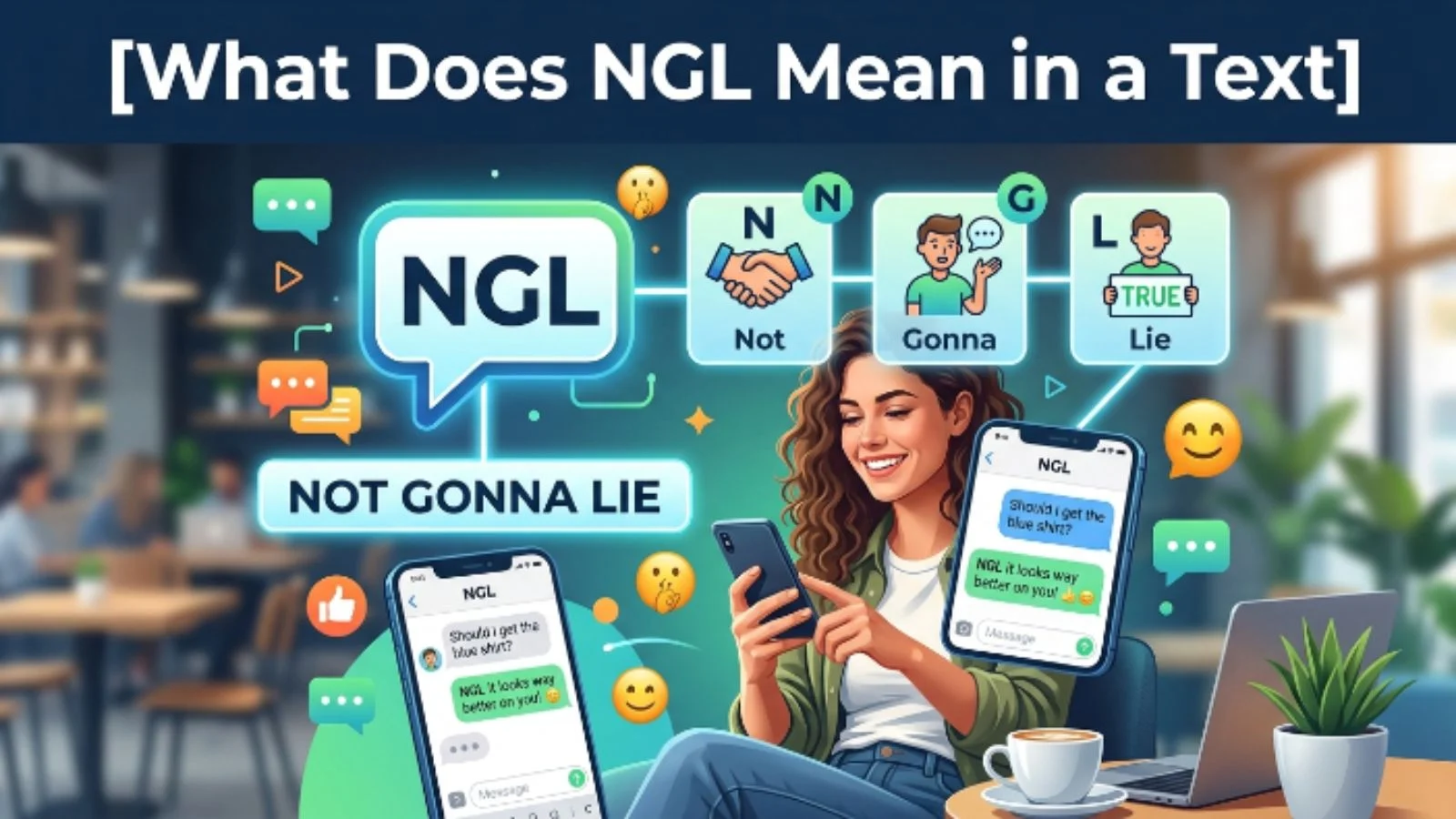
Have you ever received a text that says “NGL” and wondered what it means?
You’re not alone.
Texting slang changes quickly, and keeping up with the latest abbreviations can sometimes feel impossible. One of the most common slang terms you’ll see on social media, messaging apps, and online conversations is NGL.
The good news is that its meaning is simple and easy to understand. Once you learn what NGL means, you’ll start noticing it everywhere.
In this guide, you’ll learn exactly what NGL means in a text, how people use it, when you should use it, and some common mistakes to avoid.
What Does NGL Mean in a Text?
NGL stands for “Not Gonna Lie.”
People use it before sharing an honest opinion, confession, feeling, or statement. It signals that what they’re about to say is truthful and genuine.
Quick Definition
NGL means “Not Gonna Lie,” and it’s used to introduce an honest thought, opinion, or admission in a text message or online conversation.
For example:
- “NGL, that movie was better than I expected.”
- “NGL, I’m really tired today.”
- “NGL, your new haircut looks great.”
In each example, the person is emphasizing honesty before sharing their thoughts.
Simple Meaning of NGL
In simple words, NGL is a way of saying “to be honest” or “honestly.”
Instead of typing a full sentence, people use the abbreviation to save time.
Think of these as having the same meaning:
- NGL, I love this song.
- Honestly, I love this song.
- To be honest, I love this song.
The message stays almost identical.
Where Is NGL Used?
NGL is popular across many digital platforms.
Text Messages
Friends often use it during casual conversations.
Example:
Friend: “Did you like the restaurant?”
You: “NGL, the food was amazing.”
Social Media
You’ll frequently see NGL on:
- TikTok
- Snapchat
- X
- Threads
Users often share opinions, reactions, or personal thoughts using NGL.
Online Gaming
Gamers use NGL to express honest feedback.
Example:
“NGL, that was the toughest level I’ve played.”
Group Chats
NGL is common in group conversations when someone wants to share a genuine opinion.
Example:
“NGL, we should start the project earlier this time.”
Why Do People Use NGL?
There are several reasons why NGL has become so popular.
1. It Shows Honesty
The biggest reason is that it signals truthfulness.
When someone starts a sentence with NGL, readers know they’re expressing a real opinion.
2. It Saves Time
Typing three letters is much faster than writing “not gonna lie.”
3. It Feels Casual
NGL fits naturally into modern online conversations.
4. It Adds Emphasis
Sometimes people use NGL to make their statement feel stronger.
Example:
“NGL, that’s the best pizza I’ve ever had.”
The phrase highlights how strongly the person feels.
Real-Life Examples of NGL in Texts
Let’s look at some practical examples.
Example 1: Compliment
Text: “NGL, your presentation was impressive.”
Meaning: The person genuinely thinks the presentation was good.
Example 2: Honest Opinion
Text: “NGL, I expected the ending to be better.”
Meaning: They’re sharing their true opinion about the ending.
Example 3: Personal Feeling
Text: “NGL, I’m nervous about tomorrow.”
Meaning: They’re honestly admitting their feelings.
Example 4: Surprise
Text: “NGL, I didn’t think we’d win.”
Meaning: The speaker is making an honest confession.
Example 5: Recommendation
Text: “NGL, you should definitely try this app.”
Meaning: The recommendation is sincere.
NGL vs Similar Terms
Many internet abbreviations express honesty. Here’s how NGL compares to some common ones.
| Term | Meaning | Usage |
|---|---|---|
| NGL | Not Gonna Lie | Honest opinion or confession |
| TBH | To Be Honest | Honest statement |
| IMO | In My Opinion | Personal viewpoint |
| FR | For Real | Emphasizes truthfulness |
| ICYMI | In Case You Missed It | Sharing information |
NGL vs TBH
These are very similar.
NGL: “NGL, that game was fun.”
TBH: “TBH, that game was fun.”
The difference is mostly stylistic. Younger users often prefer NGL because it feels more conversational.
NGL vs IMO
NGL focuses on honesty.
IMO focuses on personal opinion.
Example:
- NGL, that restaurant is excellent.
- IMO, that restaurant is excellent.
Both work, but the emphasis is slightly different.
When Should You Use NGL?
NGL works best in casual situations.
Good Times to Use NGL
Use it when:
- Texting friends
- Chatting online
- Posting on social media
- Sharing opinions
- Making honest confessions
- Giving genuine feedback
Examples:
- “NGL, that concert was incredible.”
- “NGL, I’m excited for the weekend.”
- “NGL, this recipe turned out great.”
Times to Avoid NGL
Avoid using NGL in:
- Professional emails
- Business reports
- Academic papers
- Formal presentations
- Official communication
Instead, use phrases like:
- “To be honest”
- “In my opinion”
- “Frankly speaking”
These sound more professional.
Common Misunderstandings About NGL
Although NGL is simple, people sometimes misunderstand it.
Misunderstanding #1: It Means Someone Was Lying Before
Not necessarily.
People often use NGL simply as a conversational phrase.
Example:
“NGL, this weather is perfect.”
This doesn’t mean they were dishonest earlier.
Misunderstanding #2: It’s Always Negative
Many people think NGL introduces criticism.
Actually, it can be positive or negative.
Positive:
“NGL, you did an amazing job.”
Negative:
“NGL, I expected more.”
Misunderstanding #3: Only Teenagers Use It
While younger people use it frequently, adults use NGL too, especially on social media and messaging apps.
Pro Tips for Using NGL Correctly
Want to sound natural when using NGL? Keep these tips in mind.
Keep It Casual
NGL is best for relaxed conversations.
Don’t Overuse It
Using NGL in every sentence can make your messages feel repetitive.
Instead of:
- NGL, I’m hungry.
- NGL, I’m tired.
- NGL, I want coffee.
Mix up your language occasionally.
Use It Before Honest Statements
The phrase works best when introducing a genuine thought.
Example:
“NGL, I wasn’t expecting that result.”
Understand Your Audience
Friends and social media followers will likely understand NGL immediately.
In professional settings, spell things out more clearly.
Is NGL Still Popular?
Yes.
NGL remains one of the most widely used internet abbreviations in texting culture. You’ll regularly see it on social media platforms, messaging apps, gaming communities, and comment sections.
Its popularity comes from being short, easy to understand, and useful in everyday conversations.
Because honesty and authenticity are valued online, NGL continues to be relevant.
Final Thoughts
If you’ve been wondering what does NGL mean in a text, the answer is simple: NGL stands for “Not Gonna Lie.”
People use it to introduce honest opinions, genuine feelings, and truthful statements. Whether you’re texting friends, commenting on social media, or chatting online, understanding NGL helps you communicate more naturally.
Just remember to keep it casual and use it in the right situations.
The next time someone texts “NGL,” you’ll know exactly what they mean.
Frequently Asked Questions
What does NGL mean in texting?
NGL stands for “Not Gonna Lie.” It’s used to introduce an honest opinion, feeling, or statement.
Is NGL positive or negative?
It can be both. People use NGL before compliments, confessions, opinions, and criticisms.
Is NGL the same as TBH?
They are very similar. Both express honesty, although NGL often sounds more conversational.
Can I use NGL in professional emails?
It’s generally better to avoid NGL in professional communication and use more formal phrases such as “to be honest” or “frankly speaking.”
Discover More Post
