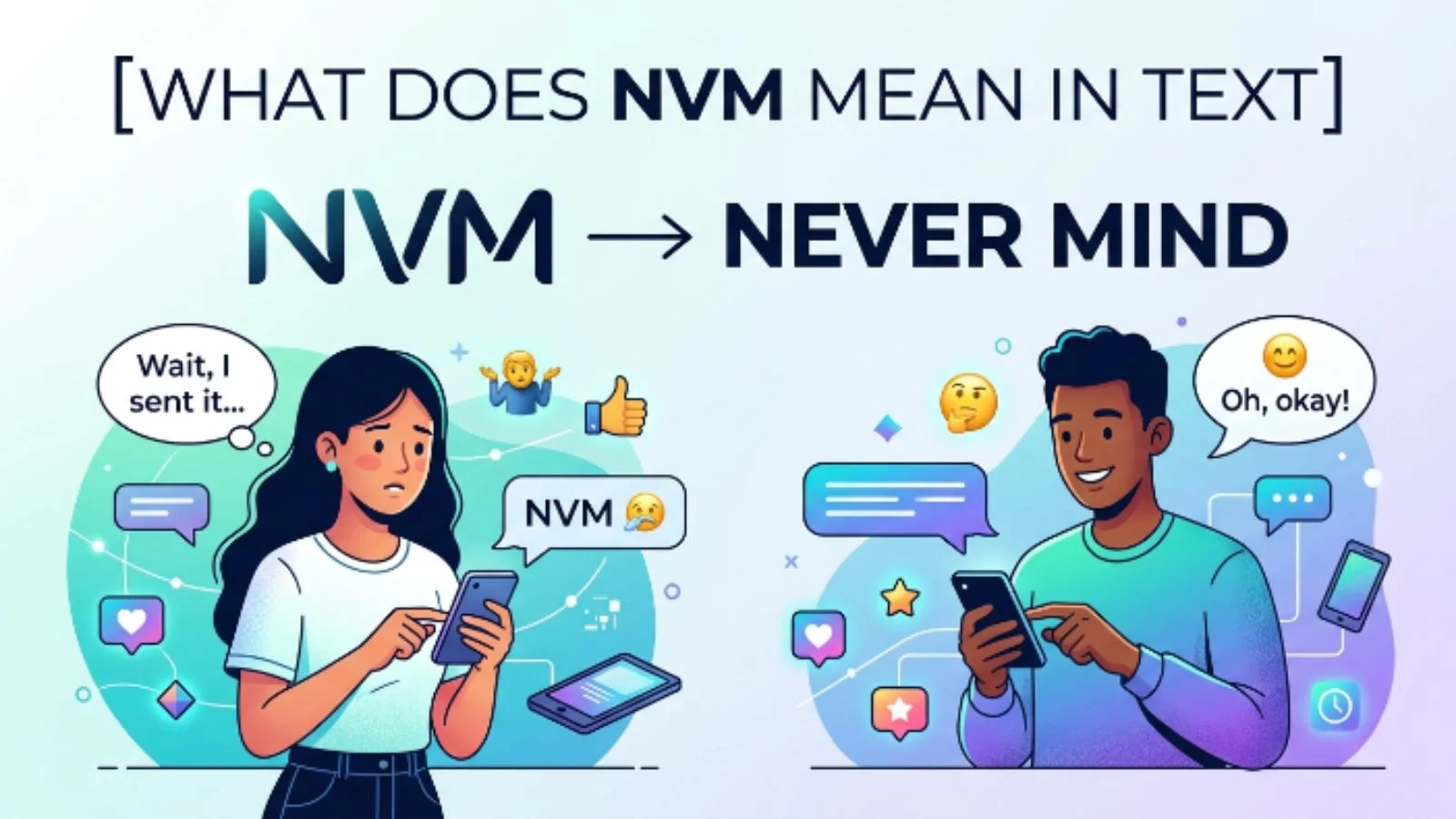
You’re texting someone, everything seems normal, and suddenly they send: “nvm.”
And you pause.
Did they change their mind? Are they upset? Did you say something wrong? Or are they just being casual?
This tiny three-letter message can feel confusing, especially if you don’t know internet slang well. The good news is: it’s actually very simple once you understand it.
In this guide, you’ll learn exactly what “nvm” means in text, how people use it, when you should reply, and how to avoid misunderstandings in real conversations.
What Does nvm Mean in Text?
The abbreviation “nvm” stands for:
“Never mind.”
It is used in texting, chatting, and social media to tell someone to ignore something, forget what was said, or stop paying attention to a previous message.
In simple words:
“nvm” means: forget what I just said or it’s not important anymore.
It’s one of the most common internet slang terms used in casual digital conversations.
Simple Meaning of nvm (Easy Explanation)
If we break it down in very simple language:
- Someone said something
- Then they changed their mind
- Or they realized it’s not important anymore
- So they type “nvm”
Think of it like this:
“Don’t worry about it anymore.”
or
“Ignore my last message.”
It’s usually short, quick, and informal.
Where Is “nvm” Used?
You will mostly see nvm in casual online conversations, such as:
- WhatsApp chats
- Instagram DMs
- Snapchat messages
- TikTok comments
- Discord chats
- Gaming conversations
- Twitter/X replies
It is NOT commonly used in formal writing like emails, business messages, or academic work.
People use it when they want fast communication without long explanations.
Why Do People Use “nvm”?
There are several reasons why “nvm” is so popular in texting culture:
1. To cancel a message quickly
Instead of explaining a long story, people just say “nvm.”
2. They already got the answer
Sometimes someone asks a question and then immediately finds the answer themselves.
3. They changed their mind
A person may decide something is no longer important.
4. To avoid awkwardness
Instead of explaining, they just drop it.
5. Speed and convenience
Typing “nvm” is faster than writing “never mind” or explaining everything again.
Real-Life Examples of “nvm” in Text
Let’s look at how it actually appears in conversations.
Example 1: Question answered quickly
A: What time is the meeting?
B: Wait let me check
B: nvm, I found it, it’s 3 PM
Meaning: No need to wait anymore.
Example 2: Change of mind
A: Are you coming to the party?
B: nvm, I can’t go anymore
Meaning: The plan has changed.
Example 3: Forget the message
A: Can you send me the file?
B: nvm, I already got it from someone else
Meaning: Request is no longer needed.
Example 4: Avoiding explanation
A: Why are you upset?
B: nvm
Meaning: The person doesn’t want to explain.
nvm vs Similar Terms (Simple Comparison)
Many slang terms are similar to “nvm,” but they are not exactly the same.
| Term | Meaning | Usage |
|---|---|---|
| nvm | Never mind | Cancel or ignore previous message |
| idc | I don’t care | Shows lack of interest |
| jk | Just kidding | Used after a joke |
| brb | Be right back | Temporary leaving chat |
| tbh | To be honest | Giving honest opinion |
Key difference:
- nvm = cancel or ignore something
- Other slang often expresses emotion or status
When Should You Use “nvm”?
You can safely use nvm when:
- You made a mistake in your message
- You got the answer yourself
- You no longer need help
- You want to stop a topic quickly
- You are texting friends or casual contacts
But avoid using it when:
- Talking to teachers or professors
- Sending professional emails
- Writing formal messages
- Communicating in work environments
In formal situations, write:
“Never mind, I already got the information.”
Common Misunderstandings About “nvm”
Even though it’s simple, people often misunderstand it.
1. Thinking it sounds rude
Sometimes “nvm” can feel cold if used alone.
Example:
“nvm.”
This may seem like you are ignoring the other person.
2. Thinking it means anger
It does NOT always mean someone is upset. It usually just means:
- change of mind
- no need anymore
3. Assuming it ends the conversation
It doesn’t always end a chat. It just drops one topic.
Pro Tips for Using “nvm” Correctly
Here are some useful tips to use it naturally:
1. Add context when needed
Instead of just saying “nvm,” you can say:
- “nvm, I figured it out”
- “nvm, it’s okay now”
This feels more polite.
2. Avoid using it alone in serious chats
In emotional or important conversations, writing only “nvm” may confuse the other person.
3. Use it in casual tone only
It works best in friendly conversations.
4. Don’t overuse it
Using it too often may make your messages unclear.
Why “nvm” Became So Popular
The rise of internet slang changed how people communicate. Short forms like nvm became common because:
- People want faster texting
- Social media encourages short replies
- Mobile typing is quicker with abbreviations
- Online conversations feel informal
Today, “nvm” is part of everyday digital language, especially among younger users.
Final Thoughts
The phrase “nvm” meaning in text is actually very simple once you understand it.
It stands for “never mind” and is used to cancel, ignore, or drop a previous message or thought.
It may look confusing at first, but in real conversations, it’s just a quick way to say:
“Forget it” or “It’s not important anymore.”
The key is to understand the tone and context. When used correctly, it makes chatting faster and easier. When used carelessly, it can feel unclear or abrupt.
So next time someone sends “nvm,” you’ll know exactly what they mean—and you won’t overthink it.
FAQ: What Does nvm Mean in Text?
1. What does nvm stand for in texting?
It stands for “never mind” and is used to cancel or ignore a previous message.
2. Is nvm rude in chat?
Not usually. It depends on tone. Alone, it can feel abrupt, but in context it is normal.
3. Can I use nvm in formal writing?
No. It is informal slang and should be avoided in professional communication.
4. What should I reply to “nvm”?
You can simply continue the conversation or ask:
- “Okay, what happened?”
- “Alright 👍”
Discover More Post
