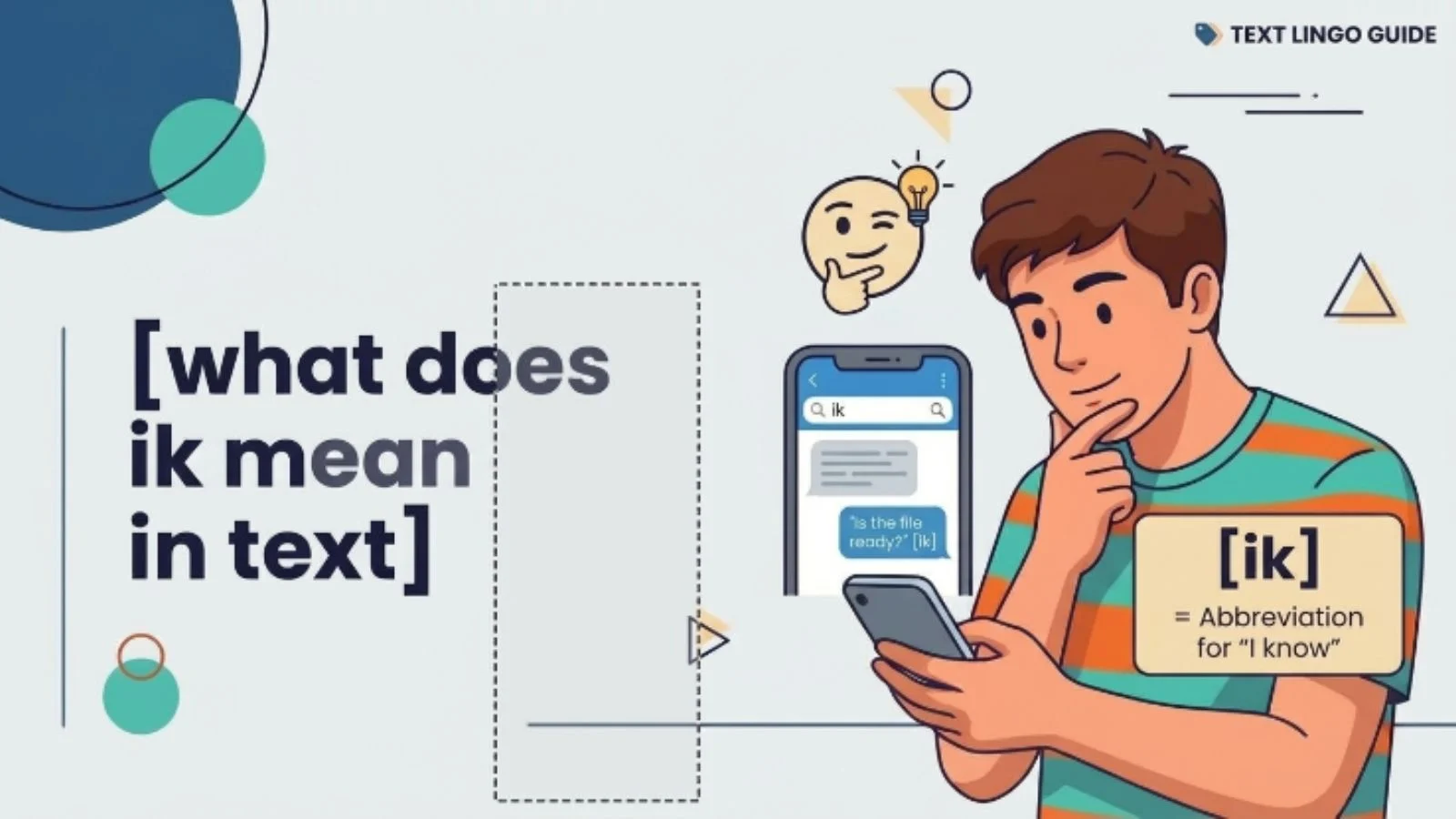
Have you ever received a text that simply says “IK” and wondered whether the person was agreeing with you, being annoyed, or just ending the conversation?
You are not alone. IK is one of those short texting abbreviations that looks simple but can have a slightly different tone depending on the conversation.
If someone sends you “IK,” they usually mean “I know.” It can show agreement, confirm that they already understand something, or respond to information they already knew.
Let’s break down exactly what IK means in text, how people use it, and how you can reply naturally.
What Does IK Mean in Text?
IK means “I know” in text messages, chats, and social media conversations.
It is a casual abbreviation used when someone already knows or understands what another person is saying.
IK = I Know
For example:
Friend: “You have a test tomorrow.”
You: “IK.”
Here, IK simply means “I know.”
It is quick, informal, and common in texting. The exact tone can depend on the words around it and the relationship between the people chatting.
Simple Meaning of IK
In very simple words, IK means “I know.”
People use it when they want to say things like:
- “I know.”
- “Yes, I already know that.”
- “I’m aware.”
- “I understand.”
- “I know what you mean.”
For example:
“You should save your work before closing the laptop.”
A person might reply:
“IK.”
This means:
“I know. You don’t need to remind me.”
However, that does not always mean the person is annoyed. They may simply be giving a short answer because they are busy.
What Does IK Stand for?
IK stands for “I Know.”
It is created from the first letters of the two words:
- I = I
- K = Know
Like many internet abbreviations, it saves time while typing.
Instead of writing:
“I know.”
Someone can quickly type:
“IK.”
This makes it useful for fast conversations on phones, messaging apps, social media, and online chats.
Where Is IK Used?
You can see IK in many casual online conversations.
It may appear on:
- Text messages
- Snapchat
- TikTok comments and messages
- Facebook Messenger
- Discord
- Online gaming chats
- Group chats
- Other social media platforms
The abbreviation is especially common when people are having a quick conversation and do not want to type full sentences.
IK in Text Messages
Texting is probably the most common place you will see IK.
For example:
A: “Don’t forget to call your mom.”
B: “IK.”
The second person is saying:
“I know.”
IK on Social Media
People may also use IK when responding to posts, comments, or direct messages.
For example:
A: “That movie is getting a sequel.”
B: “IK! I’m so excited.”
Here, IK is not rude at all. It simply shows that the person already knew the information.
IK in Group Chats
Group conversations move quickly, so short abbreviations are useful.
A: “We’re meeting at 7 tonight.”
B: “IK.”
C: “Wait, 7 PM?”
Here, B is simply confirming that they already know about the plan.
Why Do People Use IK?
There are several reasons people type IK instead of “I know.”
1. It Is Faster
Typing two letters is quicker than typing two words.
Instead of:
“I know.”
They can write:
“IK.”
This is especially useful during fast conversations.
2. It Keeps the Conversation Casual
IK has a relaxed texting style.
It usually feels more informal than writing a complete sentence.
3. It Shows Awareness
Someone may use IK to tell you that they already understand or know something.
For example:
“You need to charge your phone.”
“IK.”
The response confirms that the person is already aware.
4. It Can Show Agreement
Sometimes IK means more than simply “I know.” It can also communicate agreement or shared understanding.
For example:
“That restaurant is so expensive.”
“IK!”
Here, the person may mean:
“I know! I noticed that too.”
Examples of IK in Text
Understanding real conversations makes this abbreviation much easier.
Example 1: Simple Reminder
Person 1: “Your appointment is tomorrow.”
Person 2: “IK.”
Meaning: “I know.”
The person is simply saying they are already aware of the appointment.
Example 2: Showing Agreement
Person 1: “This weather is crazy today.”
Person 2: “IK!”
Meaning: “I know! It really is.”
The exclamation mark makes the response sound more energetic.
Example 3: Friendly Conversation
Friend 1: “You always make me laugh.”
Friend 2: “IK, I’m hilarious.”
Here, the person is joking. The meaning is still based on “I know,” but the tone is playful.
Example 4: Slightly Annoyed Tone
Person 1: “You need to finish your homework.”
Person 2: “IK.”
Depending on the situation, this could mean:
“I know. Stop reminding me.”
The abbreviation itself is not necessarily rude. The surrounding conversation determines the tone.
Example 5: Excited Reaction
Person 1: “Our favorite singer is releasing a new song!”
Person 2: “IK! Finally!”
Here, IK shows that the person already heard the news and is excited about it.
Example 6: Casual Agreement
Friend 1: “That game was difficult.”
Friend 2: “IK.”
The person agrees and indicates that they experienced the same thing.
IK vs Similar Terms
Several short expressions can look similar to IK, but their meanings and tones are different.
| Term | Meaning | Typical Use |
|---|---|---|
| IK | I know | Showing awareness |
| IKR | I know, right? | Strong agreement |
| IDK | I don’t know | Showing uncertainty |
| IMO | In my opinion | Giving an opinion |
| TBH | To be honest | Giving an honest thought |
| FR | For real | Strong agreement or emphasis |
| YEP | Yes | Casual confirmation |
IK vs IKR
This is one of the most important differences.
IK means:
“I know.”
IKR means:
“I know, right?”
For example:
A: “That movie was amazing.”
B: “IK.”
This simply means:
“I know.”
But:
A: “That movie was amazing.”
B: “IKR!”
means:
“I know, right? I completely agree!”
IK vs IDK
These two abbreviations are almost opposites.
IK = I know
IDK = I don’t know
Example:
“Did Sarah call you?”
“IK.”
This means the person knows.
But:
“IDK.”
means:
“I don’t know.”
Be careful not to confuse them when reading a message.
When Should You Use IK?
You can use IK when you are having a casual conversation and want to say that you already know something.
It works well when:
- A friend reminds you about something.
- Someone tells you information you already heard.
- You agree with something.
- You want to confirm that you understand.
- You are having a quick chat.
- You are responding casually to a friend.
For example:
“Don’t forget we have class tomorrow.”
You could reply:
“IK.”
That is perfectly natural in an informal conversation.
When You Should Avoid IK
Although IK is useful, it may not be suitable in every situation.
Avoid using it in:
- Formal emails
- Job applications
- Professional reports
- Academic assignments
- Official messages
- Important business communication
In those situations, writing “I know” or a complete sentence is usually clearer and more professional.
For example, instead of:
“IK, thanks.”
In a professional conversation, you might write:
“Yes, I’m aware. Thank you for letting me know.”
What Does IK Mean From a Girl?
If a girl sends you “IK,” it normally means exactly what it means from anyone else: “I know.”
However, the tone can change depending on the conversation.
For example:
You: “You look really nice today.”
Her: “IK.”
This could be playful or confident.
But:
You: “You already told me that yesterday.”
Her: “IK.”
Here, she may simply be confirming that she knows.
Do not assume that IK has a hidden romantic meaning. Look at the entire conversation rather than interpreting the abbreviation alone.
What Does IK Mean From a Guy?
If a guy texts “IK,” it usually means “I know.”
For example:
You: “The game starts at 8.”
Him: “IK.”
He is probably just confirming that he already knows.
The tone could be friendly, neutral, excited, or slightly annoyed depending on the context.
Can IK Sound Rude?
Yes, IK can sometimes sound rude, but the abbreviation itself is not automatically rude.
A one-word response can feel cold when the conversation is serious.
Compare these:
“IK.”
and:
“IK! Thanks for reminding me.”
The first response may sound short or annoyed.
The second sounds friendlier.
This is why punctuation and context matter when interpreting short texting abbreviations.
Common Misunderstandings About IK
Misunderstanding 1: IK Always Means Someone Is Annoyed
Not necessarily.
Someone may type IK simply because they are busy or prefer short messages.
You need to consider the entire conversation before deciding whether they are annoyed.
Misunderstanding 2: IK Means “I Agree”
Sometimes it can show agreement, but its direct meaning is “I know.”
If someone says:
“That place is expensive.”
and you answer:
“IK.”
you are showing that you already know. Agreement may be implied by the context.
Misunderstanding 3: IK Has a Secret Romantic Meaning
Usually, no.
IK does not automatically mean flirting, attraction, or romantic interest.
Its meaning depends on the conversation.
Misunderstanding 4: IK and IKR Are the Same
They are related but different.
IK = “I know.”
IKR = “I know, right?”
IKR is usually stronger when expressing agreement.
How to Reply to IK
Your response depends on what the person means and how the conversation is going.
If someone says:
“IK.”
You can continue naturally with:
- “Okay.”
- “Good.”
- “Just checking.”
- “Same.”
- “Exactly.”
- “Haha, I figured.”
- “I thought you knew.”
If their response sounds annoyed, you can simply move on rather than turning it into an argument.
Pro Tips for Using IK
Here are a few simple tips to remember.
1. Use IK mainly in casual conversations.
It is best for friends, family, social media, and informal chats.
2. Pay attention to punctuation.
“IK” and “IK!” can have different emotional tones.
3. Consider the conversation.
The same abbreviation can sound friendly in one situation and annoyed in another.
4. Do not overuse it.
Using abbreviations in every message can make conversations feel less natural.
5. Use complete words in formal situations.
When professionalism matters, write “I know” instead.
6. Do not confuse IK with IDK.
Remember:
IK = I know
IDK = I don’t know
Final Thoughts
So, what does IK mean in text? It usually means “I know.”
People use it in casual conversations to show that they are already aware of something, understand what someone is saying, or sometimes agree with a statement.
The tone can range from friendly and excited to short or slightly annoyed. That is why you should always look at the surrounding conversation before deciding what someone means.
If you see IK in a message, the simplest interpretation is usually the right one: “I know.”
Frequently Asked Questions
What does IK mean in texting?
IK means “I know” in texting. It is a casual abbreviation used when someone already knows or understands something.
What does IK mean from a girl?
If a girl texts IK, it normally means “I know.” The tone can be friendly, playful, neutral, or annoyed depending on the conversation.
What is the difference between IK and IKR?
IK means “I know,” while IKR means “I know, right?” IKR is generally used to strongly agree with someone.
Is IK rude in a text?
IK is not automatically rude. However, a very short “IK” can sometimes sound cold or annoyed, especially during a serious conversation. Context is important.
Discover More Post
