If you’ve been texting, scrolling social media, or chatting online, you’ve probably seen someone reply with just “TY”.
At first, it might look confusing. Is it an abbreviation? A code? Or something else entirely?
The truth is, “TY” is one of the simplest and most widely used internet slang terms, and once you understand it, you’ll start noticing it everywhere—from WhatsApp chats to Instagram comments and even gaming messages.
Let’s break it down in a clear, human way so you never get confused again.
What Does TY Mean in Text?
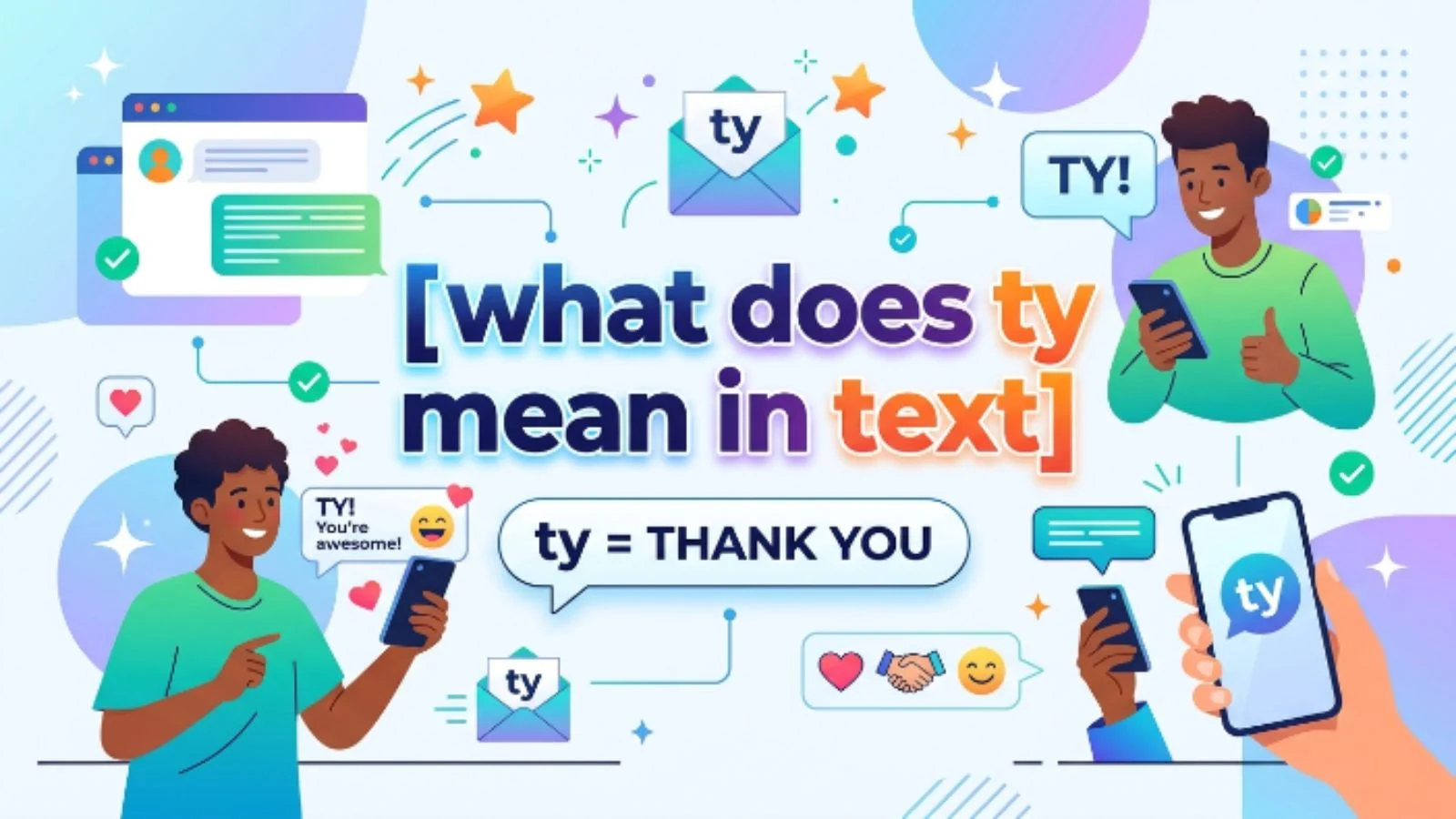
The abbreviation “TY” means “Thank You.”
It is a short form used in texting and online communication to express gratitude quickly and casually.
Instead of typing the full phrase “thank you,” people simply write:
- TY
This makes conversations faster, especially in digital spaces where speed matters.
Simple Meaning of TY in Easy Words
In the simplest explanation:
TY = Thank you
It is just a quick way to show appreciation without typing full words.
For example:
- Someone helps you online → you reply “TY”
- A friend sends you information → you reply “TY”
- A gamer assists you in a match → you say “TY”
It’s short, simple, and widely understood across the internet.
Where Is “TY” Commonly Used?
The slang TY is used almost everywhere online, especially in fast-paced conversations.
1. Text Messaging Apps
- Messenger
- SMS
2. Social Media Platforms
- Instagram comments
- TikTok replies
- Twitter/X posts
3. Online Gaming
Gamers often use TY during matches to quickly thank teammates.
4. Emails (Informal)
Sometimes used in casual professional chats, especially between coworkers who know each other well.
Why Do People Use TY Instead of “Thank You”?
People don’t just use TY randomly. There are real reasons behind it:
1. Speed and Convenience
Typing “TY” is much faster than writing “thank you,” especially in fast conversations.
2. Internet Culture
Online communication is full of abbreviations like LOL, BRB, and IDK. TY fits naturally into this style.
3. Casual Tone
TY feels more relaxed and informal. It’s perfect for friendly chats.
4. Mobile Typing Comfort
On phones, shorter messages are easier to send and read.
5. Gaming Efficiency
In games, every second counts. TY is quick and clear.
Real-Life Examples of TY in Conversations
Let’s look at how TY is actually used in real chats.
Example 1: Casual Chat
Person A: I sent you the notes.
Person B: TY
Meaning: Person B is saying thank you quickly.
Example 2: Social Media Comment
User: Here’s the link you asked for.
Reply: TY, really helpful!
Meaning: Showing appreciation for help received.
Example 3: Gaming Situation
Player 1: I revived you.
Player 2: TY
Meaning: Quick gratitude during gameplay.
Example 4: Group Chat
Friend: I saved you a seat.
You: TY, I’m on my way.
Meaning: Friendly acknowledgment.
TY vs Similar Internet Slang
TY is part of a bigger group of internet abbreviations. Here’s how it compares with similar terms:
| Term | Meaning | Usage Style |
|---|---|---|
| TY | Thank You | Casual, quick gratitude |
| THX | Thanks | Even more casual, slightly shorter |
| TYSM | Thank You So Much | More emotional appreciation |
| THANKS | Thank you (full word) | Neutral, standard |
| APPRECIATE IT | Strong gratitude | More formal and expressive |
Key Difference:
- TY = simple and quick
- TYSM = more emotional
- THANKS = slightly more formal
When Should You Use TY?
Using TY depends on the situation. It’s not always appropriate everywhere.
Good Situations to Use TY:
- Talking to friends
- Casual online chats
- Gaming communication
- Social media replies
- Informal group conversations
Avoid Using TY When:
- Writing formal emails to employers
- Communicating with clients professionally
- Academic writing or assignments
- Serious or respectful messages
In formal situations, it’s better to use:
- “Thank you”
- “Thanks a lot”
- “I appreciate it”
Common Misunderstandings About TY
Even though TY is simple, some people still get confused.
1. Thinking TY Means Something Else
Some beginners think TY might be a secret code or different phrase. In reality, it always means “thank you” in texting.
2. Confusing TY with TYSM or THX
These are related but not identical:
- TY = Thank you
- THX = Thanks
- TYSM = Thank you so much
3. Assuming It’s Too Informal Everywhere
TY is casual, but not inappropriate—it just depends on context.
Pro Tips for Using TY Correctly
If you want to use TY like a natural internet user, keep these tips in mind:
1. Match the Tone of Conversation
If someone is casual with you, TY fits perfectly.
2. Don’t Overuse It in Formal Settings
Switch to full “thank you” in professional situations.
3. Combine It with Emotion When Needed
Instead of just “TY,” you can add:
- TY, that helped a lot
- TY, appreciate it
4. Use TY for Quick Replies
It works best when you want to respond fast without long typing.
Why TY Became So Popular Online
The popularity of TY is part of a bigger trend in digital communication.
People prefer:
- Short messages
- Faster replies
- Easy typing on mobile devices
- Simple expressions
Internet slang evolves to save time and make conversations smoother. TY is a perfect example of that evolution.
It has become so common that even people who are not very active online still understand it.
Final Thoughts
Understanding what TY means in text is actually very simple once you break it down.
It stands for “Thank You” and is used worldwide in casual online communication. Whether you’re chatting with friends, playing games, or commenting on social media, TY helps you express gratitude quickly and effortlessly.
Just remember: it’s informal, so use it in the right context.
Once you get used to it, TY becomes a natural part of your digital vocabulary.
FAQ: What Does TY Mean in Text?
1. What does TY stand for in texting?
TY stands for “Thank You” and is used in casual online conversations.
2. Is TY formal or informal?
TY is informal and best used in friendly chats, not professional emails.
3. What is the difference between TY and TYSM?
TY means “Thank you,” while TYSM means “Thank you so much” and shows stronger appreciation.
4. Can I use TY in professional communication?
It’s better to avoid TY in formal communication. Use “thank you” instead.
Discover More Post
