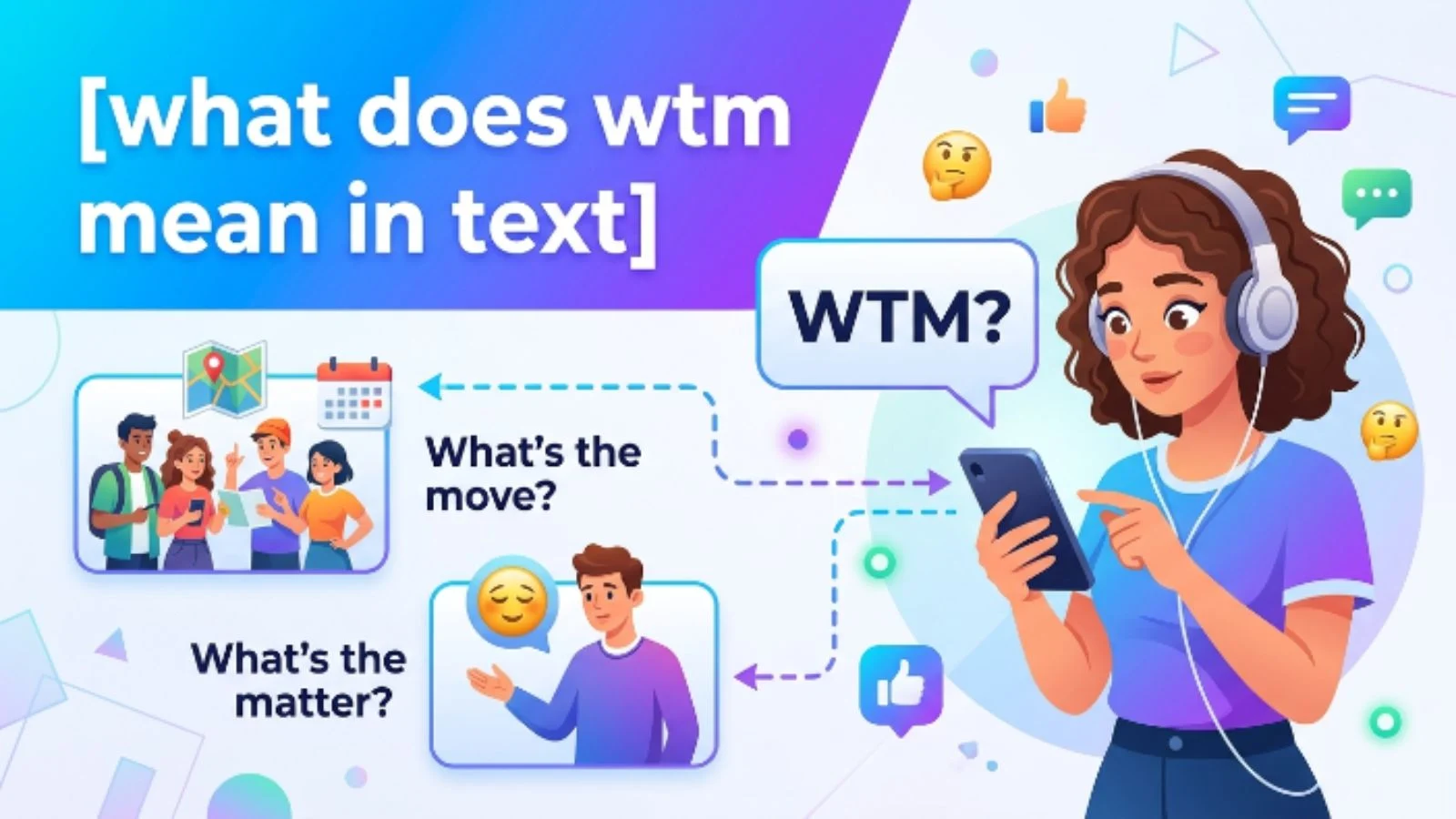
You’re scrolling through messages and someone texts “WTM?”
At first, it looks confusing. You pause for a second and wonder if you missed something important.
Is it slang? A question? Or just random typing?
The truth is, “WTM” is one of those short internet abbreviations that can mean different things depending on the situation. And if you misunderstand it, you might reply the wrong way or completely miss the intention behind the message.
In this guide, you’ll learn exactly what “WTM” means in text, how people use it in real conversations, and how you should respond when you see it.
What Does WTM Mean in Text?
The most common meaning of WTM in text is:
“What’s the move?”
This is a casual slang phrase asking about plans, activities, or what someone is doing next.
In simple terms:
It means “What are we doing?” or “What are the plans?”
However, WTM can also have other meanings depending on context:
- What’s the move? (most common slang meaning)
- What’s the matter? (used when someone seems upset)
- Whatever that means (less common, sarcastic tone)
So the real meaning always depends on the conversation.
Simple Meaning of WTM (Explained Simply)
If we break it down in very simple English:
WTM = A short way of asking “What’s going on?”
It is used when someone wants to:
- Make plans
- Check what you’re doing
- Ask if something is wrong
- React to a confusing statement
Think of it like a quick, casual way of starting a conversation.
Where Is WTM Used?
You will mostly see WTM in informal digital communication, especially:
- Text messages (SMS)
- WhatsApp chats
- Snapchat conversations
- Instagram DMs
- TikTok comments or replies
- Gaming chats and Discord servers
It is not used in formal writing, emails, or professional communication.
People use it when they want fast, relaxed communication.
Why Do People Use WTM?
There are a few simple reasons why “WTM” is so popular:
1. It saves time
Typing full sentences like “What are we doing today?” takes longer. WTM is quick.
2. It feels casual and friendly
It sounds relaxed, like talking to friends.
3. It fits modern texting culture
Short forms like LOL, BRB, WYD, and WTM are part of everyday online language.
4. It helps start conversations
Sometimes people don’t know what to say, so they send “WTM?” to begin a chat.
Real-Life Examples of WTM in Text
Let’s understand how WTM is actually used in conversations:
Example 1: Making plans
Friend 1: “WTM tonight?”
Friend 2: “We’re going out for food at 8.”
Meaning: They are asking about tonight’s plans.
Example 2: Checking availability
Person A: “WTM today?”
Person B: “Free after 5, why?”
Meaning: Asking what the other person is doing.
Example 3: Concern or confusion
Friend: “I feel really off today.”
You: “Hey, WTM?”
Meaning: Here it means “What’s the matter?”
Example 4: Group chat planning
Group: “WTM for the weekend?”
Members: Discuss ideas like movies, trips, or hangouts.
WTM vs Similar Text Slang Terms
Many people confuse WTM with other abbreviations. Here’s a simple comparison:
| Term | Meaning | Usage |
|---|---|---|
| WTM | What’s the move / matter | Asking plans or situation |
| WYD | What you doing | Asking what someone is doing right now |
| WYA | Where you at | Asking location |
| HMU | Hit me up | Asking someone to contact you |
| BRB | Be right back | Temporary leave message |
WTM is more about plans or situations, while WYD is about current activity.
When Should You Use WTM?
You can use WTM when:
- You want to make plans with friends
- You are checking what someone is doing
- You are trying to start a casual conversation
- You want to ask if something is wrong
But avoid using it when:
- Talking to teachers or bosses
- Writing professional emails
- Communicating in formal situations
WTM is strictly informal slang, not professional language.
Common Misunderstandings About WTM
Many people misread or misinterpret WTM. Here are some common mistakes:
1. Thinking it has only one meaning
WTM does not always mean “What’s the move.” Context matters.
2. Confusing it with “WTH”
Some people mix it with “What the heck,” but they are completely different.
3. Overusing it in serious conversations
WTM can feel too casual in emotional or serious discussions.
4. Not understanding tone
The meaning can change depending on punctuation and situation:
- “WTM?” = normal question
- “WTM??” = urgent or impatient tone
- “wtm…” = uncertain or emotional tone
Pro Tips for Using WTM Correctly
If you want to use WTM like a native texter, follow these tips:
- Use it only with friends or close contacts
- Always check context before replying
- Don’t assume one meaning fits all situations
- Respond clearly if someone asks you WTM (don’t ignore it)
- Combine it with time or plans for clarity (example: “WTM tonight?”)
Good communication is not just about slang—it’s about understanding intent.
Final Thoughts
So, what does WTM mean in text?
In most cases, it means “What’s the move?”, a casual way of asking about plans or what’s happening. But depending on context, it can also mean “What’s the matter?” or even “Whatever that means.”
The key to understanding WTM is simple: always read the conversation carefully.
Slang evolves fast, but once you understand the meaning behind it, you’ll never feel confused again when someone texts you “WTM?”
FAQ – What Does WTM Mean in Text?
1. What does WTM usually mean in texting?
It usually means “What’s the move?”, asking about plans or what someone is doing.
2. Can WTM mean something else?
Yes, it can also mean “What’s the matter?” depending on context.
3. Is WTM formal or informal?
WTM is strictly informal slang used in casual conversations.
4. How should I reply to WTM?
You can reply by sharing your plans or situation, such as “Nothing much, what about you?” or “I’m free today.”
Discover More Post
