Have you ever received a message that simply said “NTY” and wondered what it meant? At first glance, it can look confusing, especially if you’re not familiar with texting abbreviations.
The good news is that NTY is a common internet slang term with a very polite meaning. It helps people decline offers, invitations, or suggestions without typing a full sentence.
In this guide, you’ll learn exactly what NTY means in text, where people use it, when to use it, real-life examples, common mistakes, and much more.
What Does NTY Mean in Text?
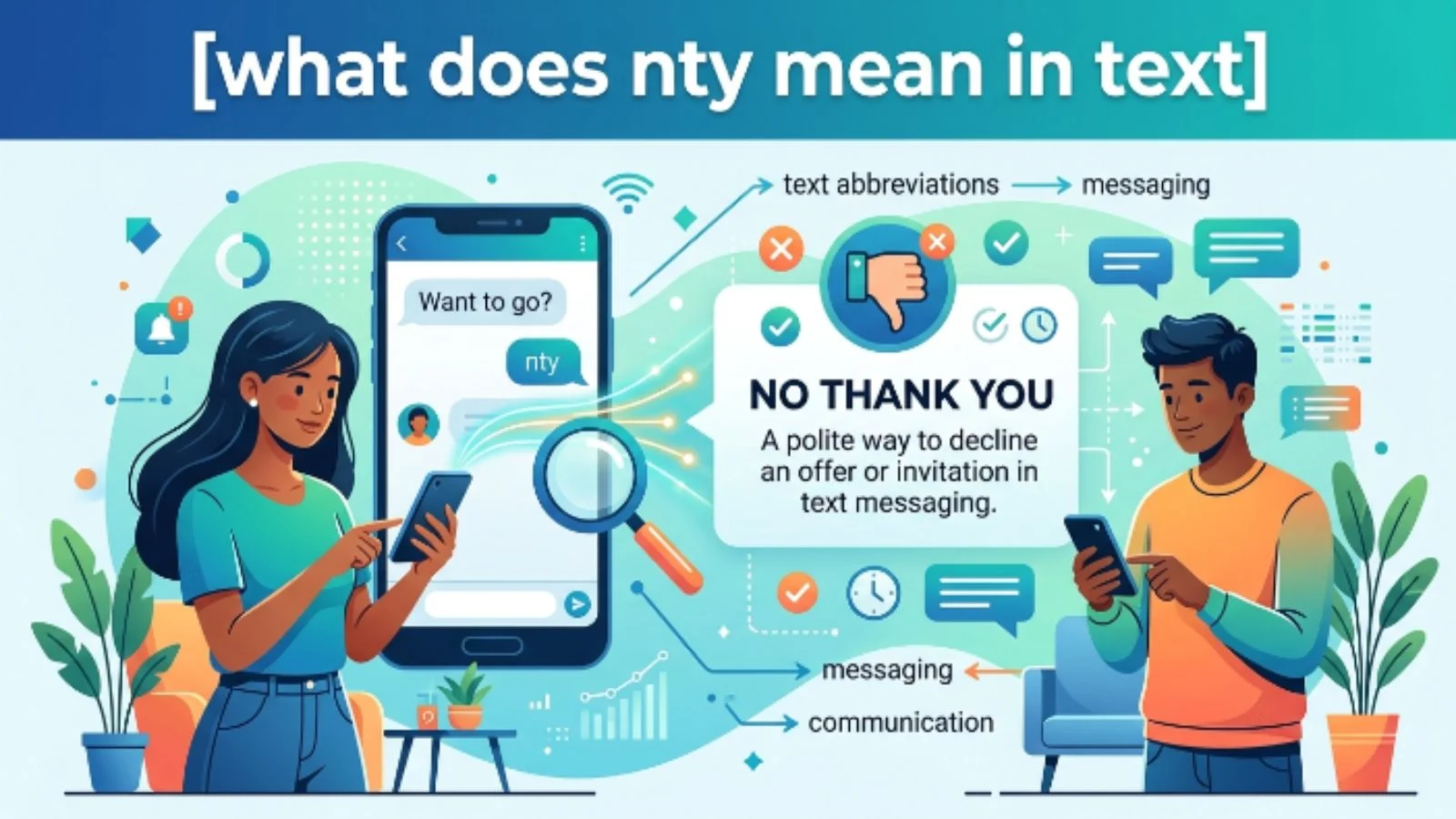
NTY stands for “No, Thank You.”
It is a short and polite way to refuse or decline something in text messages, social media chats, online games, and messaging apps.
Quick Definition
NTY means “No, Thank You.” It is used to politely decline an offer, invitation, request, or suggestion without sounding rude.
For example:
Friend: Want some pizza?
You: NTY, I already ate.
In this case, you’re saying “No, thank you” in a shorter form.
Simple Meaning of NTY
In everyday language, NTY simply means you’re saying “No” politely.
Instead of writing:
- No, thank you.
- Thanks, but no.
- I appreciate it, but I’ll pass.
People simply type:
NTY
It’s quick, respectful, and easy to understand.
Where Is NTY Used?
You’ll see NTY almost anywhere people chat online.
Text Messages
Friends often use NTY when declining offers.
Example:
Sarah: Want to come over tonight?
Emma: NTY, I’m staying home today.
Snapchat
Since Snapchat conversations are usually fast, people often use abbreviations like NTY.
Example:
“Movie tonight?”
“NTY, maybe tomorrow.”
People use NTY in direct messages or replies.
Example:
“Interested in buying this?”
“NTY.”
Discord
Gamers frequently use NTY while chatting.
Example:
“Want to join our team?”
“NTY.”
Online Gaming
Players often decline trades or invitations.
Example:
“Trade your sword?”
“NTY.”
Facebook Messenger
NTY is also common in casual conversations.
Many people use NTY in group chats and personal conversations.
Example:
“Want coffee?”
“NTY.”
Why Do People Use NTY?
There are several reasons why NTY has become popular.
It Saves Time
Typing NTY is much faster than writing an entire sentence.
Instead of typing:
“No thank you, I appreciate the offer.”
People simply write:
“NTY.”
It Sounds Polite
Unlike simply saying No, adding Thank You makes your response kinder.
Compare these:
No
vs.
NTY
The second one sounds much more respectful.
It Keeps Conversations Short
Many online conversations move quickly.
Using abbreviations like NTY helps people respond without slowing down the chat.
Everyone Understands It
Among frequent internet users, NTY is widely recognized.
Real-Life Examples of NTY
Here are several situations where people use NTY.
Example 1: Declining Food
Mom: Want another slice of cake?
You: NTY, I’m full.
Explanation:
You’re politely refusing because you’ve already eaten enough.
Example 2: Declining an Invitation
Friend: Want to go shopping?
You: NTY, I’m busy today.
Explanation:
You don’t want to go, but you’re being respectful.
Example 3: Online Shopping
Seller: Interested in this deal?
Buyer: NTY.
Explanation:
The buyer isn’t interested.
Example 4: Gaming
Player: Trade?
You: NTY.
Explanation:
You don’t want to trade items.
Example 5: Group Chat
Friend: Anyone want pizza?
You: NTY.
Explanation:
You’re declining the offer politely.
Example 6: Event Invitation
Coworker: Want to join us for dinner?
You: NTY, maybe next time.
Explanation:
You’re saying no while keeping the conversation friendly.
Different Ways People Say NTY
Although NTY is popular, people also use similar phrases.
Some alternatives include:
- No thanks
- Thanks anyway
- I’ll pass
- Maybe another time
- Not today
- Appreciate it, but no
- No, thank you
Each expresses a polite refusal.
NTY vs Similar Texting Terms
| Abbreviation | Meaning | When It’s Used |
|---|---|---|
| NTY | No, Thank You | Politely declining |
| TY | Thank You | Showing gratitude |
| NP | No Problem | Responding to thanks |
| NVM | Never Mind | Canceling a request |
| IDC | I Don’t Care | Showing no preference |
| IMO | In My Opinion | Sharing an opinion |
| TBH | To Be Honest | Giving an honest opinion |
Notice that NTY is specifically used when saying no politely, while the others have completely different meanings.
When Should You Use NTY?
NTY works best in casual conversations.
Good situations include:
- Declining food
- Refusing invitations
- Saying no to a game request
- Declining online offers
- Refusing a trade
- Turning down recommendations
- Rejecting sales messages
For example:
“Want to watch a movie?”
“NTY.”
This sounds friendly and respectful.
When You Shouldn’t Use NTY
Although NTY is useful, it’s not appropriate everywhere.
Avoid using it in:
Business Emails
Instead of writing:
“NTY.”
Write:
“Thank you for your offer, but I’ll have to decline.”
Job Applications
Professional communication should avoid texting abbreviations.
School Assignments
Teachers usually expect complete sentences.
Formal Customer Service Conversations
Using full language sounds more professional.
Is NTY Rude?
No.
In fact, NTY is considered one of the politest texting abbreviations.
Because it includes “Thank You,” it softens your refusal.
Compare these responses:
No
This can sound cold.
NTY
This sounds respectful.
Can NTY Ever Sound Rude?
Sometimes.
Tone depends on the conversation.
For example:
Someone sends a heartfelt invitation.
You reply:
“NTY.”
Although polite, it may feel a little short.
Instead, you could write:
“NTY, maybe next weekend.”
Adding a few extra words makes your response warmer.
Common Misunderstandings About NTY
Many people misunderstand NTY.
Mistake 1: Thinking It Means “Not You”
Some beginners believe NTY means Not You.
That is incorrect.
The standard meaning is:
No, Thank You
Mistake 2: Assuming It’s Rude
Because it’s short, some think NTY sounds unfriendly.
Actually, it’s meant to be polite.
Mistake 3: Using It Professionally
NTY is internet slang.
Professional writing should use complete sentences.
Mistake 4: Using It Without Context
Sometimes simply writing “NTY” can confuse people who don’t know internet abbreviations.
If you’re unsure whether the other person understands it, write the full phrase instead.
Pro Tips for Using NTY Correctly
Here are some helpful tips.
Use NTY in casual conversations.
Friends and family will usually understand it immediately.
Add extra words when needed.
Instead of:
“NTY.”
Try:
“NTY, maybe another time.”
This feels more friendly.
Don’t overuse abbreviations.
Using too many texting shortcuts can make conversations harder to read.
Consider your audience.
Older relatives or coworkers may not recognize NTY.
Be polite.
Even though NTY is short, kindness always matters.
Is NTY Popular Today?
Yes.
NTY remains a commonly used abbreviation across many messaging platforms because people like quick, polite responses.
You’ll regularly see it in:
- Personal text messages
- Snapchat conversations
- Instagram DMs
- WhatsApp chats
- Discord servers
- Online gaming communities
- Facebook Messenger
Its popularity comes from its simplicity and respectful tone.
Final Thoughts
If you’ve ever wondered what does NTY mean in text, the answer is simple: it stands for “No, Thank You.”
It’s a quick, polite, and widely understood way to decline offers, invitations, requests, or suggestions in casual online conversations. While it’s perfect for texting friends, chatting in games, or responding on social media, it’s best to avoid using it in formal emails or professional settings. Understanding abbreviations like NTY can help you communicate more naturally and avoid confusion in today’s digital conversations.
Frequently Asked Questions
What does NTY mean in texting?
NTY means “No, Thank You.” It’s a polite way to decline an offer, invitation, or request.
Is NTY considered rude?
No. It is generally viewed as a respectful and friendly way to say no because it includes “thank you.”
Where is NTY commonly used?
NTY is commonly used in text messages, WhatsApp, Snapchat, Instagram, Discord, Facebook Messenger, and online gaming chats.
Should I use NTY in professional emails?
No. In professional communication, it’s better to write the complete phrase, such as “No, thank you” or “Thank you for your offer, but I’ll have to decline.”
Discover More Post
