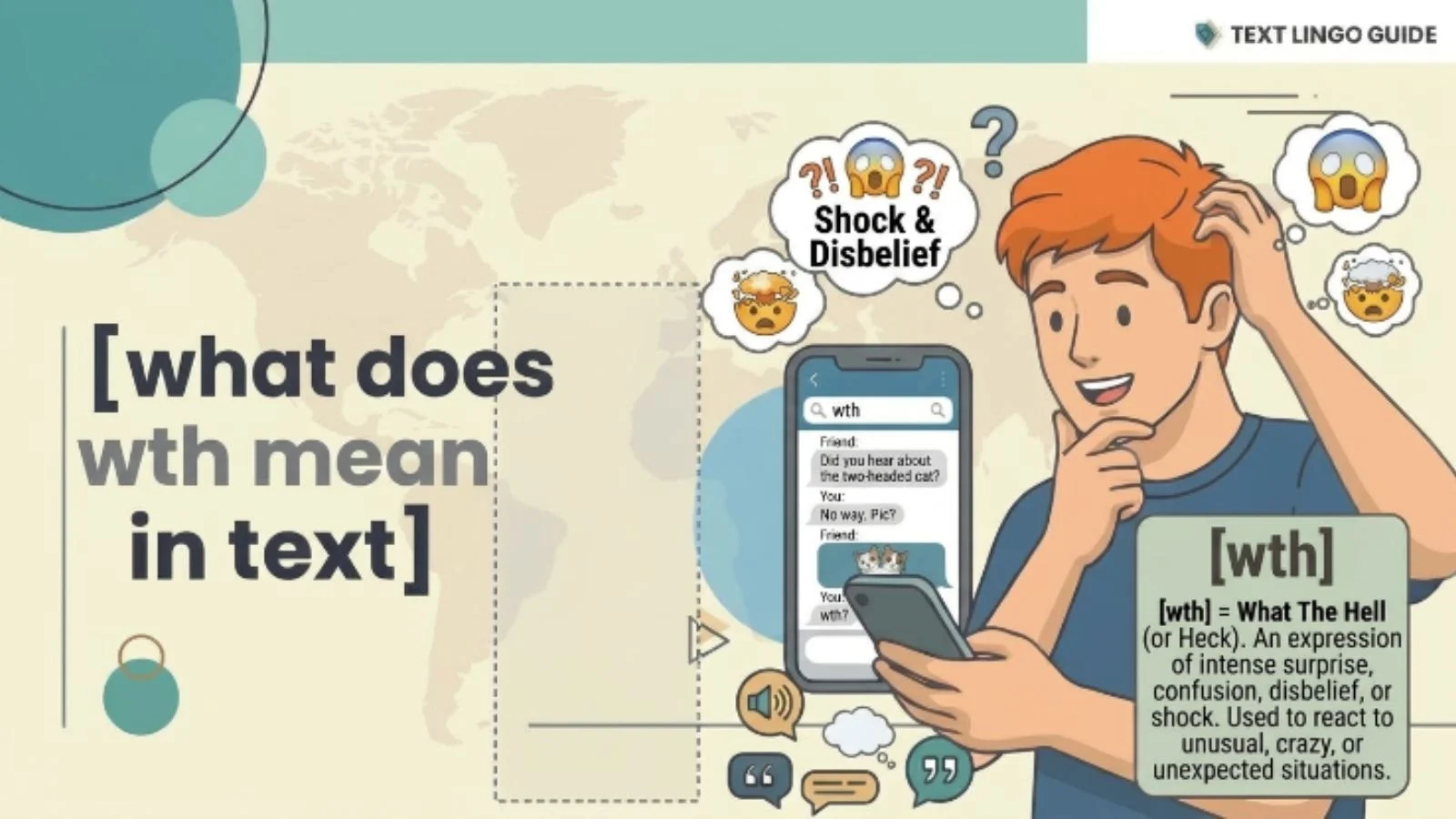
If someone suddenly texts you “WTH?”, you might wonder what they actually mean. Is the person confused, shocked, annoyed, or angry?
The short answer is that WTH usually means “What the hell?” in texting and online conversations. It is commonly used to show surprise, confusion, disbelief, annoyance, or frustration.
However, the exact feeling behind “WTH” depends heavily on the conversation and the relationship between the people texting. In some situations, it can be playful. In others, it can sound rude or irritated.
This guide explains what WTH means in text, how people use it, what it means in different situations, and how you can respond naturally.
What Does WTH Mean in Text?
WTH means “What the hell?” in most text messages, chats, and social media conversations.
It is an informal expression used when someone is surprised, confused, shocked, annoyed, or unable to believe something.
For example:
“WTH is going on?”
This means:
“What the hell is going on?”
Another example:
“WTH? You actually won?”
Here, the person is showing surprise rather than necessarily being angry.
Quick Definition
WTH = What the hell
It is a casual texting abbreviation used to express surprise, confusion, disbelief, or frustration. The meaning can change slightly depending on the situation and tone.
Simple Meaning of WTH
In simple English, WTH is a shorter way to say “What the hell?”
People often use it because typing three words takes more effort than typing three letters. It also makes a message feel quick and casual.
For example:
Without abbreviation:
“What the hell are you doing?”
With WTH:
“WTH are you doing?”
Both sentences have almost the same basic meaning.
However, the second one feels more like casual internet or text language.
Depending on context, WTH can communicate:
- Confusion: “WTH is this?”
- Surprise: “WTH, you did it?”
- Disbelief: “WTH! No way.”
- Annoyance: “WTH are you doing?”
- Frustration: “WTH happened here?”
- Playful shock: “WTH, you ate the whole pizza?”
So, you should not automatically assume that someone is angry when they use WTH.
Where Is WTH Used?
You can see WTH in many forms of digital communication.
It is especially common in informal conversations such as:
- Text messages
- Instagram comments and DMs
- Snapchat chats
- TikTok comments
- WhatsApp conversations
- Facebook Messenger
- Discord chats
- Online forums
- Gaming chats
- Group conversations
The abbreviation is generally associated with casual communication.
You would usually not use WTH in a formal email, job application, academic paper, or professional message.
For example, sending this to your manager would usually be inappropriate:
“WTH happened to the meeting?”
A more professional version would be:
“What happened to the meeting?”
Why Do People Use WTH?
People use WTH because it is short, expressive, and easy to type.
Texting language often removes unnecessary words and uses abbreviations to make conversations faster.
1. To Show Surprise
Someone might use WTH after hearing unexpected news.
“WTH! You bought a new car?”
The person is probably surprised and wants to show that reaction immediately.
2. To Show Confusion
WTH can also mean that something does not make sense.
“WTH is this supposed to mean?”
Here, the sender is confused and wants an explanation.
3. To Show Annoyance
The abbreviation can sound stronger when someone is already frustrated.
“WTH are you doing?”
This may mean that the person is upset about your actions.
4. To Show Disbelief
WTH can communicate that something seems unbelievable.
“WTH? They actually canceled the event?”
The sender did not expect that to happen.
5. To Add Emotion
Sometimes people use WTH simply because “What the hell?” sounds more expressive than “What?”
Compare:
“What happened?”
with:
“WTH happened?”
The second version carries more emotion.
WTH Meaning in Different Situations
The same abbreviation can have different meanings depending on the conversation.
WTH in a Friendly Chat
In a conversation between close friends, WTH may be completely playful.
Friend: “I just finished eating five burgers.”
You: “WTH? How are you still hungry?”
You may be joking rather than genuinely angry.
WTH During an Argument
During an argument, WTH can sound much more aggressive.
“WTH is wrong with you?”
In this context, the expression may show strong frustration or anger.
WTH on Social Media
People often use WTH in comments when reacting to unexpected content.
“WTH did I just watch?”
This usually expresses surprise or confusion.
WTH in Gaming
Gamers may use WTH when something unexpected happens during a game.
“WTH? How did you hit me from there?”
The player may be shocked or frustrated.
Real-Life Text Examples of WTH
Understanding examples is one of the easiest ways to understand texting slang.
Example 1: Surprise
Person A: “I got tickets to the concert.”
Person B: “WTH! Seriously?”
Here, WTH expresses excitement and surprise.
Example 2: Confusion
Person A: “The website is showing a completely different price.”
Person B: “WTH is happening?”
The sender is confused about the situation.
Example 3: Annoyance
Person A: “I deleted the file by accident.”
Person B: “WTH? We needed that file.”
Here, WTH communicates frustration.
Example 4: Disbelief
Person A: “He finished the entire project overnight.”
Person B: “WTH? How?”
The sender cannot believe how quickly the work was completed.
Example 5: Playful Reaction
Person A: “I just ate an entire cake.”
Person B: “WTH, you were hungry.”
This can be humorous between friends.
Example 6: Unexpected News
Person A: “They are moving to another country next month.”
Person B: “WTH? I had no idea.”
The abbreviation highlights the person’s surprise.
WTH vs Similar Texting Terms
WTH is similar to several other internet expressions, but they do not always carry exactly the same tone.
| Term | Meaning | Common Feeling |
|---|---|---|
| WTH | What the hell | Surprise, confusion, frustration |
| WTF | What the f*** | Stronger shock, anger, or disbelief |
| OMG | Oh my God | Surprise, excitement, shock |
| WYD | What are you doing? | Asking about someone’s activity |
| Huh? | What? / I don’t understand | Confusion |
| Seriously? | Are you serious? | Disbelief or annoyance |
WTH vs WTF
The most important comparison is between WTH and WTF.
Both can express shock, confusion, or frustration. However, WTF contains a stronger profanity, so it can sound more offensive.
WTH is often chosen when someone wants to express a similar reaction in a slightly less explicit way.
For example:
“WTH is happening?”
is generally less harsh than:
“WTF is happening?”
Still, WTH is not necessarily formal or polite. The word “hell” is still informal.
WTH vs OMG
OMG means “Oh my God.”
It is often used for excitement, surprise, or shock.
For example:
“OMG, you look amazing!”
WTH is more likely to question something:
“WTH happened?”
So, OMG often reacts to something, while WTH can both react and ask for an explanation.
When Should You Use WTH?
WTH works best when you’re having a casual conversation with someone who understands informal texting language.
You can use it when:
- You are surprised.
- Something seems confusing.
- Something unexpected happened.
- You are joking with a friend.
- You want to show mild frustration.
- You are reacting to surprising news.
- You are chatting casually online.
For example:
“WTH, I didn’t know you were coming!”
This sounds natural in a casual conversation.
When Should You Avoid WTH?
Although WTH is less explicit than some stronger expressions, it is still informal.
Avoid using it in situations where you need to sound professional or respectful.
For example, avoid WTH in:
- Job applications
- Business emails
- Formal complaints
- School assignments
- Academic writing
- Professional reports
- Messages to people you do not know well
Instead of:
“WTH is going on with my order?”
You could write:
“Could you please explain what is happening with my order?”
The second version is much more appropriate for customer service.
Common Misunderstandings About WTH
WTH Does Not Always Mean Anger
This is one of the biggest misunderstandings.
If your friend writes:
“WTH! You actually did it!”
They may be excited or amazed, not angry.
The surrounding words and previous messages help determine the intended tone.
WTH Is Not Always a Question
Although WTH can be used to ask a question, it can also be an emotional reaction.
For example:
“WTH! That’s crazy.”
This is not really asking “what?” It is expressing disbelief.
Capital Letters Do Not Automatically Mean Anger
You may see:
“WTH?”
or:
“wth?”
Capital letters can make the abbreviation stand out more, but capitalization alone does not tell you exactly how the sender feels.
Look at the whole message.
WTH Is Not a Formal English Expression
Even though the individual words are standard English, WTH as an abbreviation belongs mainly to informal digital communication.
It should not be treated as appropriate language for every situation.
How to Reply When Someone Says WTH
Your response should depend on why they used it.
If They Are Confused
Give them a clear explanation.
“I accidentally sent the old version. I’ll send the correct one now.”
If They Are Surprised
You can confirm the news.
“Yep, it’s true. I finally finished it.”
If They Are Annoyed
Try to understand the problem rather than immediately becoming defensive.
“Sorry, I didn’t realize that caused a problem.”
If They Are Joking
You can respond in the same casual style.
“I know, I know. I couldn’t help myself.”
The key is to read the context before deciding what WTH means emotionally.
Pro Tips for Using WTH
1. Consider Your Relationship
WTH is safer with friends and people you regularly chat with.
If you are speaking to a teacher, manager, client, or new professional contact, use standard wording instead.
2. Look at the Rest of the Message
Do not interpret WTH by itself.
Compare:
“WTH? That’s amazing!”
with:
“WTH are you doing?”
The first may be excited. The second may sound irritated.
3. Avoid Using It During Sensitive Conversations
When emotions are already high, WTH can make a message sound harsher than you intended.
A calm sentence may prevent unnecessary conflict.
4. Use It Naturally
You do not need to add WTH to every surprised reaction.
Sometimes simple words such as “What happened?”, “Really?”, or “Are you serious?” communicate your meaning more clearly.
5. Remember That Tone Is Easy to Misread
Text messages do not include voice tone or facial expressions.
Something intended as a joke can sometimes sound rude when written down. Use WTH carefully when you are unsure how the other person will interpret it.
Frequently Asked Questions
What does WTH mean in text messages?
WTH usually means “What the hell?” It is an informal abbreviation used to express surprise, confusion, disbelief, annoyance, or frustration.
Is WTH rude?
WTH can be considered mildly rude or informal because it contains the word “hell.” Its tone depends on the situation. Friends may use it casually, while it may be inappropriate in professional conversations.
Is WTH the same as WTF?
They have similar uses, but WTF is generally stronger and more vulgar. WTH is often used as a milder alternative when someone wants to express shock, confusion, or frustration without using stronger profanity.
What should I reply to WTH?
Look at the context first. If the person is confused, explain what happened. If they are surprised, confirm the information. If they are joking, you can respond casually. If they sound angry, answer calmly and directly.
Final Thoughts
So, what does WTH mean in text? In most cases, it means “What the hell?” and is used to express surprise, confusion, disbelief, or frustration.
The important thing is that WTH does not have one fixed emotional tone. A friend saying “WTH, that’s awesome!” is very different from someone saying “WTH are you doing?”
Before responding, look at the full message, the situation, and your relationship with the sender. In casual texting, WTH can be a quick and expressive way to react. In professional or formal communication, however, spelling out your meaning is usually a better choice.
Discover More Post
