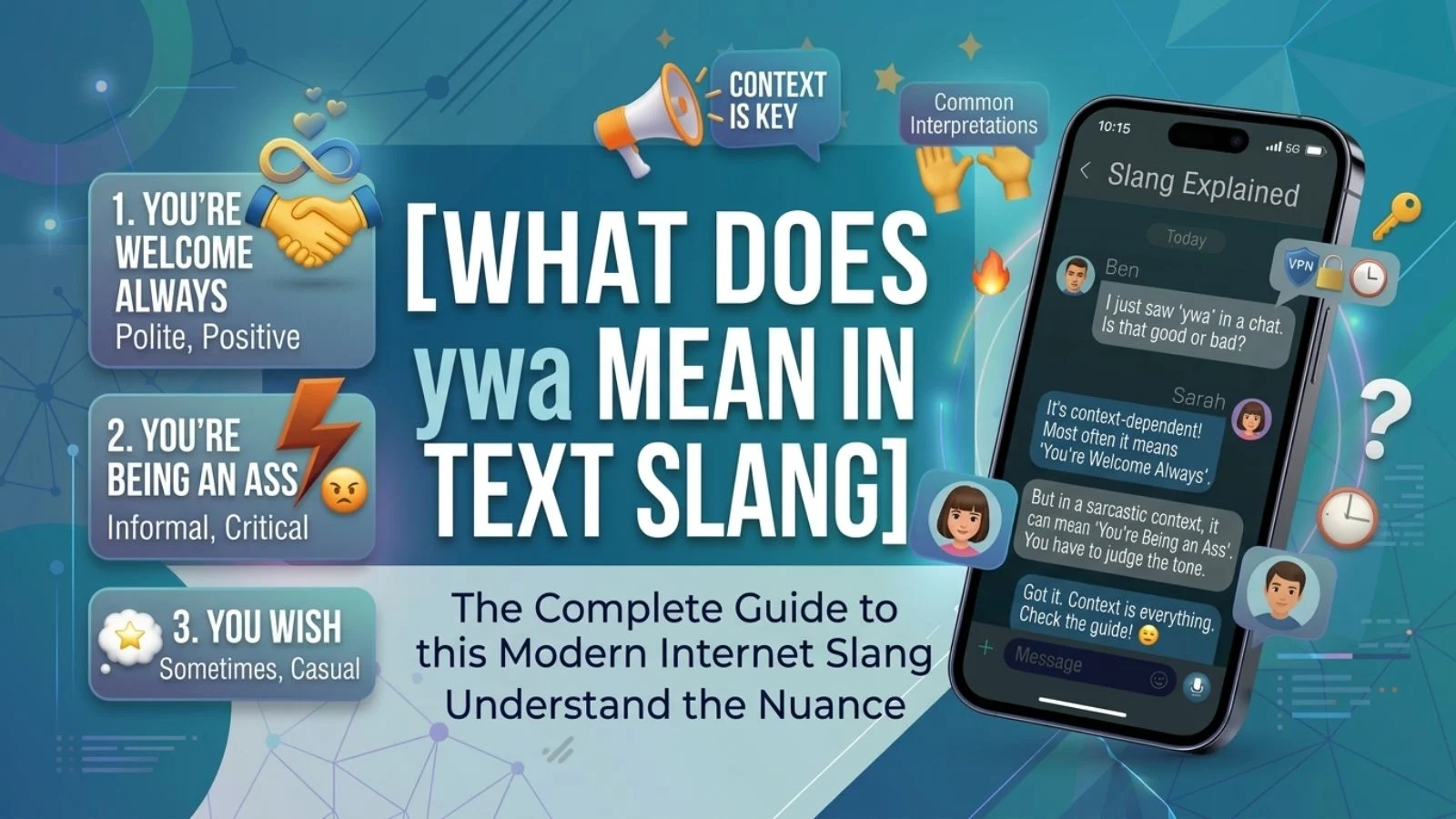
Have you received a text that says “YWA” and wondered what the person actually meant? You are not alone. Short slang terms can be confusing because the same few letters can have different meanings depending on the conversation.
In texting and online chats, YWA most commonly means “You’re Welcome Anyway.” It is usually used as a casual response when someone thanks you, especially when the situation feels slightly awkward, playful, or unnecessary.
But context matters. In this guide, you will learn what YWA means, how people use it, what tone it can have, and how to respond naturally.
What Does YWA Mean in Text?
YWA usually means “You’re Welcome Anyway.”
It is a casual texting abbreviation used as a response to “thank you” or “thanks.” The word “anyway” can add a playful, slightly sarcastic, or relaxed tone depending on the conversation.
YWA = You’re Welcome Anyway
For example:
Friend: Thanks for helping me with my homework.
You: YWA!
Here, YWA simply means “You’re welcome anyway.”
However, the exact feeling behind YWA depends heavily on the context. It can sound friendly, joking, or slightly sarcastic.
YWA Simple Meaning
In simple words, YWA is a short way to say “you’re welcome anyway.”
Someone might use it when they helped you even though you did not really need their help, or when they are responding casually after being thanked.
For example:
A: Thanks, but I figured it out myself.
B: YWA.
In this case, “YWA” can have a playful meaning like “Well, you’re welcome anyway.”
The phrase does not always carry a serious or negative meaning. Many people use it casually with friends.
What Does YWA Mean in a Text Message?
When you see YWA in a text message, the safest interpretation is usually “You’re Welcome Anyway.”
The abbreviation is especially common in informal conversations where people already understand each other’s tone.
For example:
“Thanks for the advice!”
“YWA.”
This means:
“You’re welcome anyway.”
The short form saves time and keeps the conversation relaxed.
However, if someone sends only “YWA” without any surrounding context, it can be difficult to know whether they are being sincere, funny, or sarcastic.
Where Is YWA Used?
YWA can appear in many types of online communication, especially informal conversations.
You may see it in:
- Text messages
- Instagram DMs
- Snapchat chats
- TikTok comments or messages
- Facebook Messenger
- WhatsApp conversations
- Group chats
- Online gaming chats
- Casual social media conversations
It is generally better suited to informal communication than professional writing.
For example, sending “YWA” to a close friend can sound completely normal. Using it in a formal email to your manager would usually be inappropriate.
Why Do People Use YWA?
There are several reasons someone might use YWA instead of writing the full phrase.
1. It Is Faster
Texting slang allows people to communicate quickly.
Instead of typing:
“You’re welcome anyway.”
They can simply type:
“YWA.”
This is especially useful during fast conversations.
2. It Keeps the Conversation Casual
YWA has a relaxed texting style. It can make a conversation feel less formal.
For example:
Friend: Thanks for sending that link.
You: YWA
This sounds much more casual than a formal response such as “You are welcome.”
3. It Can Add Humor
Depending on the situation, YWA can be playful.
Imagine someone says:
“Thanks, but I didn’t actually need your help.”
You might reply:
“YWA.”
The phrase can carry a joking “Well, you’re welcome anyway” feeling.
4. It Can Show Mild Sarcasm
Sometimes YWA is used with a slightly sarcastic tone.
For example:
Person 1: I already knew that.
Person 2: YWA.
Here, the person may be jokingly saying, “You’re welcome anyway.”
This is why context is important when interpreting texting slang.
Real-Life Examples of YWA
Understanding examples is one of the easiest ways to learn how YWA works.
Example 1: Simple and Friendly
Sarah: Thanks for helping me with the project.
Mike: YWA.
Here, YWA is simply a casual response to “thanks.”
Example 2: Playful
Alex: Thanks, but I found the answer before you sent it.
Sam: YWA.
Here, Sam is probably being playful. The meaning is similar to:
“Well, you’re welcome anyway.”
Example 3: Slightly Sarcastic
Tom: I didn’t ask you to do that.
Jake: YWA.
In this situation, YWA may sound sarcastic. Jake could be jokingly pointing out that he helped anyway.
Example 4: Casual Chat
A: Thanks for sending me the notes.
B: YWA! Hope they help.
The meaning is friendly and relaxed.
Example 5: Group Chat
Friend 1: Who sent me that screenshot?
Friend 2: Me.
Friend 1: Thanks!
Friend 2: YWA.
Again, it simply works as a casual “you’re welcome.”
YWA vs Similar Texting Terms
YWA can be confused with other abbreviations used when responding to thanks.
| Slang | Meaning | Typical Tone |
|---|---|---|
| YWA | You’re Welcome Anyway | Casual, playful |
| YW | You’re Welcome | Casual and common |
| YVW | You’re Very Welcome | Friendly |
| NP | No Problem | Casual |
| NBD | No Big Deal | Relaxed |
| TY | Thank You | Appreciative |
| TYSM | Thank You So Much | Very appreciative |
The main difference is that YWA specifically includes the idea of “anyway.”
For example:
YW = You’re welcome.
YWA = You’re welcome anyway.
That extra word can change the tone.
YWA vs YW
The abbreviation YW is much more straightforward.
If someone says:
“Thanks!”
You can respond:
“YW!”
It simply means “You’re welcome.”
YWA can feel slightly more playful:
“Thanks, but I already knew that.”
“YWA.”
The second response can imply “Well, you’re welcome anyway.”
So, if you are unsure about the tone, YW is generally safer and more neutral than YWA.
When Should You Use YWA?
You can use YWA when you are talking with people who understand casual internet slang.
It works well when:
- You are chatting with friends.
- The conversation is informal.
- Someone has thanked you.
- You want to sound relaxed.
- The situation has a playful or joking tone.
- You are responding in a group chat.
For example:
“Thanks for the reminder.”
“YWA.”
That is perfectly natural in an informal conversation.
When Should You Avoid YWA?
Although YWA can be useful in casual chats, it is not appropriate for every situation.
Avoid it in formal communication such as:
- Job applications
- Business emails
- School assignments
- Official messages
- Customer service communication
- Professional workplace emails
Instead of writing:
“YWA”
in a professional setting, write:
“You’re welcome.”
or:
“My pleasure.”
The full phrase is clearer and more professional.
Common Misunderstandings About YWA
Because texting abbreviations can have different meanings, YWA can sometimes cause confusion.
Misunderstanding 1: Thinking YWA Always Sounds Friendly
Not necessarily.
YWA can be friendly, but it can also sound sarcastic depending on the conversation.
Compare these:
“Thanks for helping!”
“YWA!”
This probably sounds friendly.
Now consider:
“I didn’t ask for your help.”
“YWA.”
This could sound sarcastic.
The surrounding words and relationship between the people matter.
Misunderstanding 2: Assuming Every Person Knows the Abbreviation
Not everyone understands internet slang.
Someone unfamiliar with YWA may simply have no idea what it means.
If you are speaking to someone who does not commonly use texting abbreviations, saying “You’re welcome anyway” is clearer.
Misunderstanding 3: Confusing YWA With YW
YWA and YW are related, but they are not exactly the same.
YW means “You’re Welcome.”
YWA means “You’re Welcome Anyway.”
The word “anyway” can make YWA feel more playful or context-dependent.
Misunderstanding 4: Assuming It Is Always Positive
The word “anyway” can sometimes introduce a slightly dismissive or sarcastic feeling.
That does not mean YWA is rude by default.
You need to look at the conversation before deciding what the person intended.
How Do You Reply to YWA?
If someone sends you YWA, you do not always need to reply.
If you want to continue the conversation, you could say:
“Haha, thanks again.”
or:
“I appreciate it.”
If the conversation is casual, you can simply move on to the next topic.
For example:
You: Thanks for the help!
Friend: YWA.
You: Anyway, what are you doing later?
There is no special response required.
Can YWA Be Sarcastic?
Yes, YWA can be sarcastic.
This depends on how the phrase is used.
For example:
Person A: I didn’t need your help.
Person B: YWA.
Here, the second person may be jokingly saying, “You’re welcome anyway.”
But if a friend sends:
“Thanks for helping me!”
“YWA!”
the same abbreviation may simply be friendly.
This is a good example of why text slang cannot always be interpreted from the letters alone.
Is YWA Rude?
YWA is not automatically rude.
Its tone depends on the situation, the relationship between the people, punctuation, and the messages before it.
A simple “YWA” could be:
- Friendly
- Playful
- Humorous
- Lightly sarcastic
- Slightly dismissive
If you are worried about sounding rude, use “You’re welcome” instead.
That removes most of the uncertainty.
Pro Tips for Using YWA
If you want to use YWA naturally, keep a few things in mind.
Use It With People You Know
YWA works best with friends, family, classmates, or people who regularly use casual internet slang.
Pay Attention to the Context
Before using YWA, think about what the other person said.
If the conversation is serious, the abbreviation may not be the best choice.
Consider Your Tone
A short message can sometimes be misunderstood.
Adding punctuation or another phrase can make your intention clearer.
For example:
“YWA haha”
sounds more playful than:
“YWA.”
The second version might feel more serious or sarcastic depending on the conversation.
Use Full Words When Clarity Matters
If there is any chance the other person will misunderstand you, simply write:
“You’re welcome anyway.”
Clear communication is more important than saving a few seconds of typing.
Why Context Matters With Texting Slang
One of the biggest challenges with internet slang is that tone is often missing from text.
When people speak face-to-face, they can use their voice, facial expressions, and body language to show whether they are joking.
Text messages do not always provide those clues.
That means a word like YWA can have different meanings depending on the conversation.
For example:
“YWA!”
could feel cheerful.
While:
“YWA.”
could feel more serious or sarcastic.
The letters are identical, but the reader may interpret the tone differently.
Is YWA Common in Texting?
YWA is understandable as casual texting shorthand, but YW (“you’re welcome”) is generally the more direct and widely recognized abbreviation.
If you see YWA, context is the best way to understand the intended tone.
It may appear more often in personal chats than in formal or professional communication.
Frequently Asked Questions
What does YWA mean in text?
YWA usually means “You’re Welcome Anyway.” It is a casual texting abbreviation used after someone says thank you. Depending on context, it can sound friendly, playful, or slightly sarcastic.
Is YWA the same as YW?
No. YW means “You’re Welcome,” while YWA means “You’re Welcome Anyway.” YWA can carry a more playful or context-dependent tone because of the word “anyway.”
Can YWA be sarcastic?
Yes. YWA can be sarcastic when someone uses it after an unnecessary, unwanted, or humorous act of help. The meaning depends on the conversation and relationship between the people.
Should I use YWA in professional messages?
It is better to avoid YWA in professional communication. Use “You’re welcome” or “My pleasure” instead. These phrases are clearer and more appropriate for work or formal conversations.
Final Thoughts
So, what does YWA mean? In most texting conversations, YWA means “You’re Welcome Anyway.” It is an informal abbreviation that people use after being thanked.
The interesting part is its tone. YWA can be friendly, playful, humorous, or slightly sarcastic depending on the situation.
If you see YWA in a message, look at the conversation around it before deciding exactly how the sender intended it. And if you use it yourself, save it for casual conversations where the other person is likely to understand your tone.
Discover More Post
