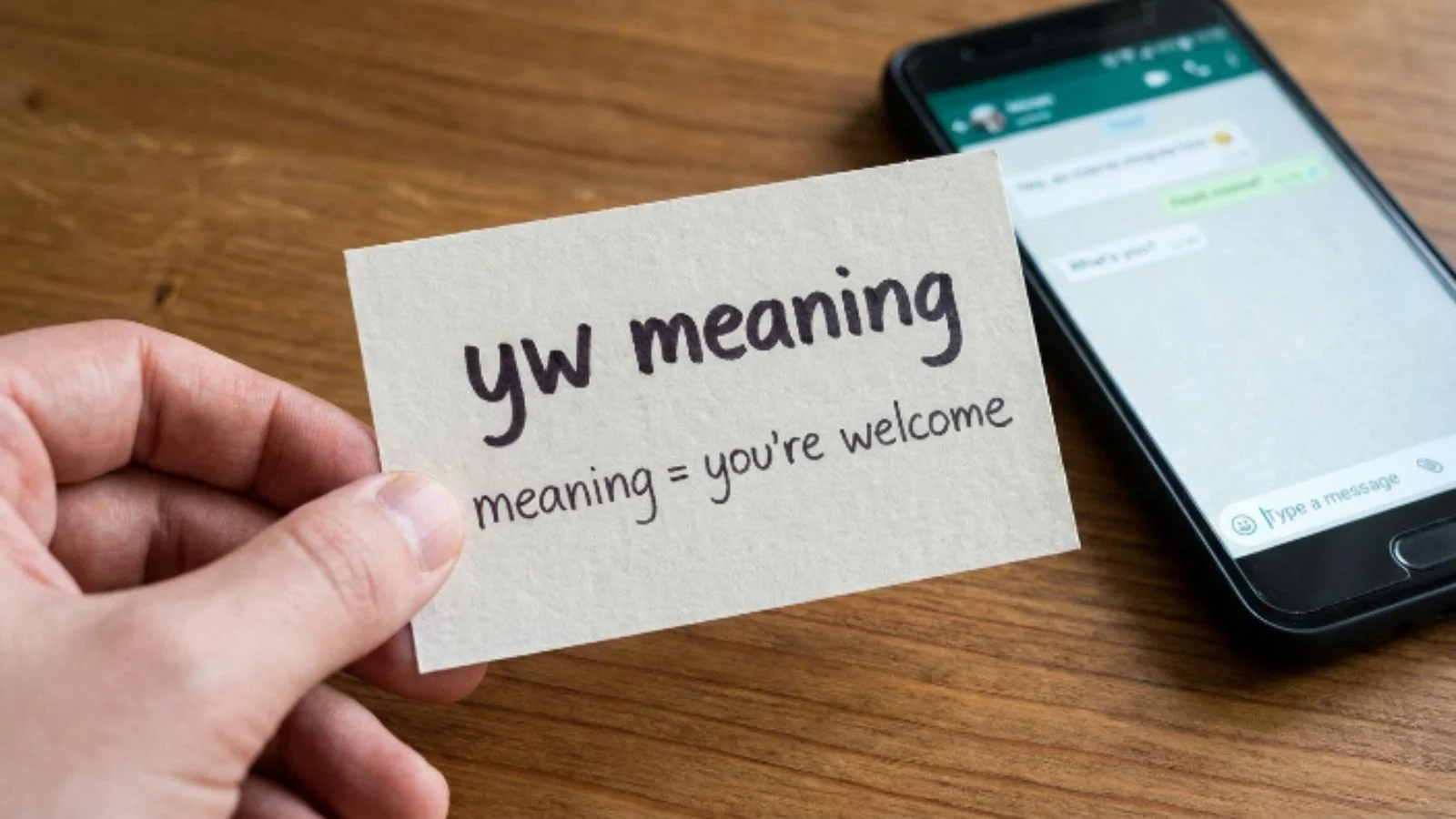
If you’ve ever received a message saying “YW” and wondered what it means, you’re not alone.
Texting and online communication are full of short forms and abbreviations. One of the most common is YW, which people use every day in text messages, social media comments, gaming chats, and workplace conversations.
The good news is that YW is simple to understand.
In most cases, YW means “You’re Welcome.”
It is a quick and friendly response when someone says “thank you.”
In this complete guide, you’ll learn:
- The exact meaning of YW
- When and how people use it
- Real-life examples
- Conversation samples
- The history of the abbreviation
- Common mistakes to avoid
- Modern usage trends in 2026
- Frequently asked questions
Let’s explore everything you need to know about YW.
What Does YW Mean?
YW stands for “You’re Welcome.”
People use it as a short response after someone thanks them.
Simple Definition
When a person says:
“Thank you”
Another person may reply:
“YW”
The meaning is exactly the same as saying:
- You’re welcome
- No problem
- Glad to help
- Anytime
It is simply a faster way to respond in digital conversations.
Quick Meaning Table
| Abbreviation | Full Meaning | Usage |
|---|---|---|
| YW | You’re Welcome | Reply to thanks |
| TY | Thank You | Express gratitude |
| NP | No Problem | Casual response |
| NBD | No Big Deal | Informal response |
| OFC | Of Course | Friendly reply |
YW Meaning in Text Messages
In text messaging, YW is most commonly used after receiving appreciation.
Example
Person A: “Thanks for sending the notes.”
Person B: “YW.”
Explanation: Person B is saying “You’re welcome” in a short form.
Another Example
Person A: “Thank you for helping me.”
Person B: “YW! Happy to help.”
Explanation: The abbreviation keeps the conversation quick and friendly.
Because texting is fast, people often shorten common phrases.
YW is one of the easiest and most widely recognized abbreviations.
YW Meaning on Social Media
On social media platforms, YW has the same meaning.
People use it on:
- TikTok
- X
- Snapchat
- Threads
- YouTube comments
Example
Comment:
“Thanks for sharing this information.”
Reply:
“YW.”
Explanation: The creator is politely acknowledging the thank-you message.
Example
“Thanks for the recommendation!”
“YW! Hope you enjoy it.”
Explanation: The person is responding in a friendly and conversational way.
YW Meaning in Online Gaming
Gamers often use abbreviations to communicate quickly.
YW appears frequently after helping teammates.
Example
Player 1:
“Thanks for the backup.”
Player 2:
“YW.”
Explanation: Player 2 is saying “You’re welcome” after helping.
Fast communication is important during games, which makes abbreviations useful.
YW Meaning at Work
Even professionals sometimes use YW in casual workplace chats.
However, context matters.
Casual Team Chat
Employee A:
“Thanks for fixing the spreadsheet.”
Employee B:
“YW.”
Explanation: This is acceptable in informal internal messaging.
Formal Email
Instead of YW, professionals usually write:
- You’re welcome
- Happy to help
- My pleasure
Explanation: Full phrases appear more professional in formal communication.
Origin and History of YW
The abbreviation YW developed as texting became popular.
Early Internet Era
During the 1990s and early 2000s, internet users wanted faster ways to communicate.
Character limits and slower typing encouraged people to shorten words and phrases.
Examples included:
- LOL
- BRB
- TY
- IMO
- YW
YW naturally became a short version of “You’re Welcome.”
Growth Through Mobile Phones
As text messaging became common, abbreviations spread rapidly.
People wanted to save:
- Time
- Typing effort
- Phone keypad clicks
YW became one of the standard internet abbreviations.
Modern Usage in 2026
Today, smartphones make typing easier, but YW remains popular because:
- It is short
- It is familiar
- Most users understand it instantly
- It keeps conversations moving quickly
How to Use YW Correctly
Using YW is simple.
Rule 1: Use It After Thanks
YW is usually a response to gratitude.
Example:
“Thanks for your help.”
“YW.”
Explanation: This is the most common and correct use.
Rule 2: Keep It Friendly
YW works best in casual conversations.
Example:
“Thank you for the advice.”
“YW!”
Explanation: The exclamation mark adds warmth and friendliness.
Rule 3: Match the Conversation Style
If someone is formal, you may want to avoid abbreviations.
Example:
Formal:
“You’re welcome.”
Informal:
“YW.”
Explanation: Match your tone to the situation.
Different Ways People Write YW
You may see YW written in different forms.
Common Variations
- YW
- yw
- Yw
- YW!
- yw 🙂
All of these generally mean the same thing.
Examples
“YW!”
Explanation: Friendly and enthusiastic.
“yw”
Explanation: Very casual and relaxed.
“YW :)”
Explanation: Adds a positive tone.
Real-Life Examples of YW
Here are some realistic examples.
Example 1: School
Student A:
“Thanks for sharing your notes.”
Student B:
“YW.”
Explanation: Student B is politely responding.
Example 2: Family
Brother:
“Thanks for helping me move.”
Sister:
“YW.”
Explanation: A casual family conversation.
Example 3: Friends
Friend A:
“Thank you for the ride.”
Friend B:
“YW! Anytime.”
Explanation: Shows kindness and friendliness.
Example 4: Online Shopping
Customer:
“Thanks for the quick response.”
Seller:
“YW.”
Explanation: A brief but polite reply.
Example 5: Social Media
Follower:
“Thanks for the tutorial.”
Creator:
“YW!”
Explanation: Acknowledges appreciation from followers.
Short Dialogues Using YW
Dialogue 1
Alex: “Thanks for explaining that.”
Ben: “YW.”
Explanation: Ben means “You’re welcome.”
Dialogue 2
Emma: “Thank you for your support.”
Sophia: “YW! Glad I could help.”
Explanation: Sophia responds warmly.
Dialogue 3
David: “Thanks for the recommendation.”
Mark: “YW. Hope you like it.”
Explanation: Mark is being polite and conversational.
Dialogue 4
Lucy: “Thanks for sending the link.”
Anna: “YW.”
Explanation: Anna acknowledges the thank-you message.
Personality Traits Associated With Using YW
Using YW does not reveal someone’s entire personality, but it can suggest certain communication styles.
Efficient
People who use YW often prefer quick communication.
They like getting straight to the point.
Friendly
YW is usually used politely.
It shows acknowledgment and appreciation.
Casual
Many users choose YW because it creates a relaxed atmosphere.
Tech-Savvy
Frequent internet users often understand and use abbreviations naturally.
When You Should Use YW
YW works well in many situations.
Good Situations
- Text messages
- Social media chats
- Online gaming
- Group chats
- Messaging apps
- Casual workplace communication
Example
“Thanks for reminding me.”
“YW.”
Explanation: Simple and appropriate.
When You Should Avoid YW
There are situations where writing the full phrase is better.
Formal Emails
Instead of:
“YW”
Use:
“You’re welcome.”
Job Applications
Professional communication should avoid excessive abbreviations.
Academic Writing
YW is generally not appropriate in formal essays or reports.
Official Business Communication
Full sentences appear more professional.
Common Mistakes People Make With YW
Many beginners misunderstand abbreviations.
Let’s look at common mistakes.
Mistake 1: Using YW Before Someone Thanks You
Incorrect:
“YW”
Without receiving thanks first.
Why it’s wrong: YW is normally a response, not a conversation starter.
Mistake 2: Using It in Very Formal Situations
Incorrect:
“YW”
In a formal business proposal.
Why it’s wrong: Professional settings usually require complete phrases.
Mistake 3: Thinking It Has Multiple Meanings Everywhere
Most of the time, YW means “You’re Welcome.”
Context is important.
Mistake 4: Overusing Abbreviations
Too many abbreviations can confuse readers.
Balance casual language with clarity.
Similar Abbreviations to YW
Many internet abbreviations are related to gratitude and responses.
| Abbreviation | Meaning |
|---|---|
| TY | Thank You |
| THX | Thanks |
| NP | No Problem |
| OFC | Of Course |
| IDC | I Don’t Care |
| NVM | Never Mind |
| TTYL | Talk To You Later |
| BRB | Be Right Back |
| IMO | In My Opinion |
| IDK | I Don’t Know |
Learning these can improve your understanding of online conversations.
Modern Usage of YW in 2026
Digital communication continues to evolve.
Even though voice messages and AI tools are common in 2026, YW remains widely used.
Why It Is Still Popular
- Easy to type
- Universally understood
- Saves time
- Works across platforms
- Fits modern communication habits
Popular Places Where YW Appears
- Messaging apps
- Gaming platforms
- Social media comments
- Community forums
- Team collaboration tools
Many younger users still use YW daily.
Alternatives to YW
Sometimes you may want a different response.
Friendly Alternatives
- You’re welcome
- No problem
- Anytime
- Happy to help
- My pleasure
- Glad to help
- Of course
Examples
“Thanks for helping.”
“My pleasure.”
Explanation: More polite and professional.
“Thanks!”
“Anytime.”
Explanation: Friendly and warm.
“Thank you.”
“Glad to help.”
Explanation: Positive and supportive.
Does YW Ever Mean Something Else?
In rare situations, YW may represent other phrases or names.
However, in texting and social media conversations, it almost always means:
“You’re Welcome.”
Always check the context if you’re unsure.
Example
Person A:
“Thanks for the information.”
Person B:
“YW.”
Explanation: The meaning is clearly “You’re welcome.”
Context makes the interpretation easy.
Why Understanding YW Matters
Internet communication moves quickly.
Understanding common abbreviations helps you:
- Read messages faster
- Avoid confusion
- Communicate naturally
- Participate in online conversations
- Improve digital literacy
YW is one of the simplest abbreviations to learn, yet it appears frequently across digital platforms.
Knowing it can make texting and chatting easier.
FAQs About YW Meaning
What does YW stand for in text?
YW stands for “You’re Welcome.” It is commonly used as a response after someone says thank you.
Is YW rude?
No. YW is generally polite and friendly. However, in formal situations, writing “You’re welcome” may sound more professional.
Can I use YW in professional communication?
You can use it in casual workplace chats, but full phrases are usually better for emails and formal business communication.
What should I reply after someone says YW?
You can simply continue the conversation or say something like:
- Thanks again
- Appreciate it
- Glad we could talk
No special response is required.
Is YW still popular in 2026?
Yes. Despite changes in technology and communication styles, YW remains a widely used abbreviation in texting, social media, and online chats.
What is the difference between YW and NP?
YW means “You’re Welcome,” while NP means “No Problem.” Both are common responses to a thank-you message.
Can YW be written in lowercase?
Yes. “yw” and “YW” have the same meaning. Lowercase versions are simply more casual.
Conclusion
Understanding the YW meaning is simple once you know the context. In most text messages, social media conversations, gaming chats, and casual online discussions, YW stands for “You’re Welcome.” It is a quick, polite, and widely recognized response when someone expresses gratitude. While it works perfectly in informal conversations, using the full phrase “You’re welcome” is often better in professional or formal settings. As digital communication continues to evolve in 2026, YW remains one of the most common and useful internet abbreviations. Learning terms like YW can help you communicate more confidently and understand online conversations with ease. Explore more texting abbreviations to strengthen your digital communication skills.
Discover More Post
