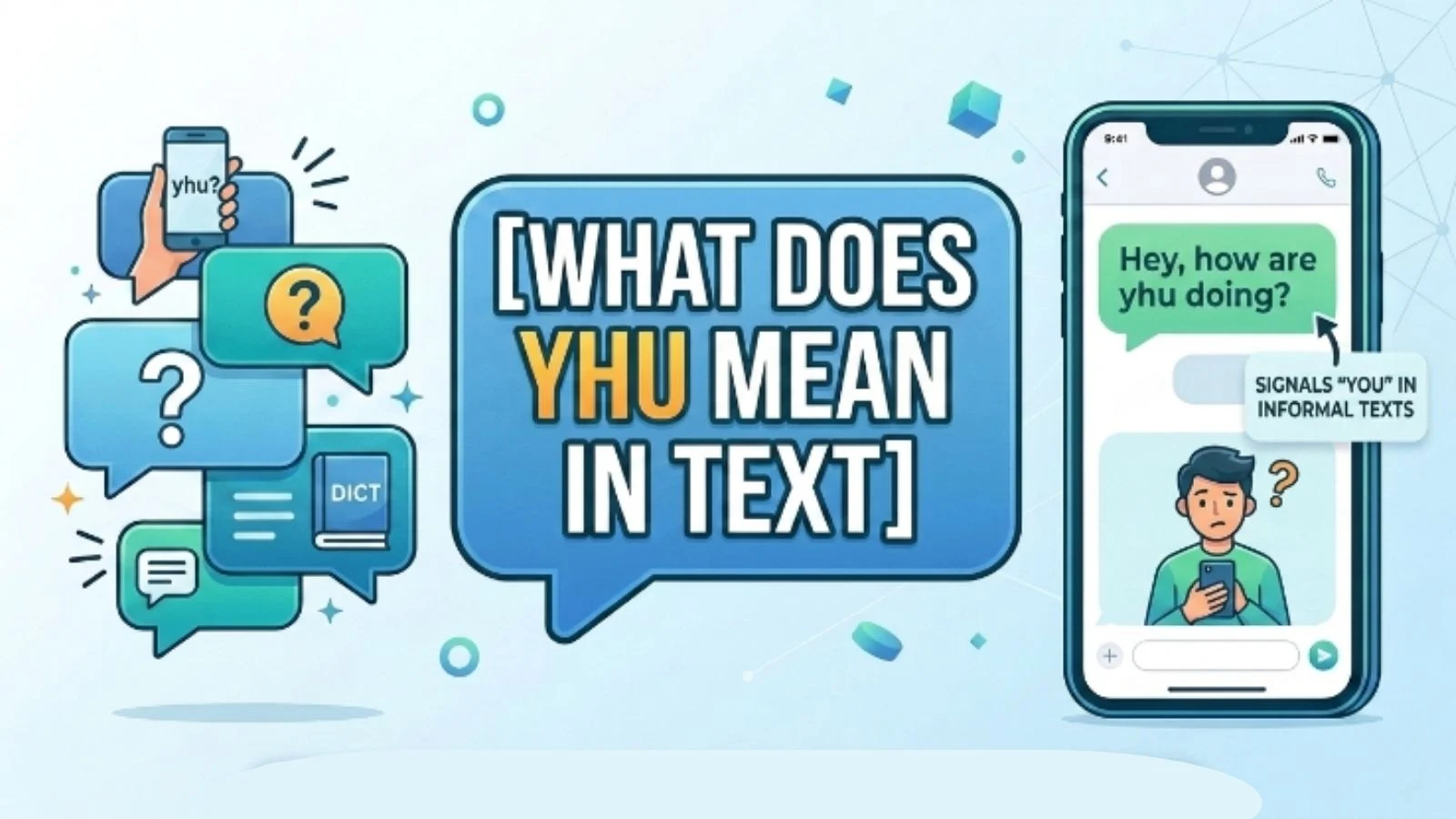
Have you ever received a text that says, “Yhu coming tonight?” and wondered why the person wrote “yhu” instead of “you”?
You are not alone. Texting has created countless shortcuts, slang terms, and creative spellings. Some are easy to understand, while others can leave you wondering what the sender actually means.
One of these casual spellings is “yhu.” It is commonly seen in text messages, social media comments, direct messages, and online conversations.
So, what does yhu mean in text?
Let’s break it down in a simple way so you can understand exactly what it means, why people use it, and how to respond when someone sends it to you.
What Does Yhu Mean in Text?
“Yhu” is usually an informal or stylized spelling of “you.”
People use yhu in texting and online conversations to make their messages sound more casual, playful, personal, or expressive. In most situations, it has the same basic meaning as “you.”
For example:
“Yhu look good today.”
This simply means:
“You look good today.”
Another example:
“Are yhu free later?”
The sender is asking:
“Are you free later?”
The exact meaning does not usually change. The spelling is simply different.
Quick Definition
Yhu means “you” in most texting and social media conversations. It is an informal spelling used to give a message a casual, playful, or distinctive tone.
It is not normally considered standard English spelling, so you would generally avoid it in formal writing.
What Is the Simple Meaning of Yhu?
The easiest way to understand yhu is to mentally replace it with “you.”
When someone writes:
“Yhu need to come with us.”
Read it as:
“You need to come with us.”
When someone says:
“I miss yhu.”
It means:
“I miss you.”
The surrounding words usually make the meaning obvious.
In other words, yhu is more about style than meaning. The sender is changing the spelling of “you,” not necessarily changing what they are trying to communicate.
Why Do People Write Yhu Instead of You?
There are several reasons someone might use yhu.
1. It Feels More Casual
Texting is generally less formal than writing an email, school assignment, or business document.
People often change spellings to make their messages feel relaxed.
For example:
“Yhu wanna go?”
sounds more like casual texting than:
“Do you want to go?”
The unusual spelling can make the conversation feel more informal.
2. It Can Show Personality
Online communication does not include many of the signals we get from face-to-face conversations, such as facial expressions and tone of voice.
Because of this, people sometimes use unusual spellings to show personality.
Someone who regularly writes “yhu” may simply like the way it looks or feels when texting.
3. It Can Make a Message Sound Playful
Depending on the person and conversation, yhu can give a sentence a playful or lighthearted feeling.
For example:
“Yhu really thought I was gonna forget?”
The spelling adds a casual flavor to the message.
However, you should not automatically assume that “yhu” is flirtatious. Context matters.
4. It Can Become Part of Someone’s Typing Style
Some people develop their own texting habits.
They might regularly write:
- yhu instead of you
- luv instead of love
- tho instead of though
- ur instead of your or you’re
- ya instead of you
For them, “yhu” may simply be part of their normal online vocabulary.
Where Is Yhu Used?
You are most likely to see yhu in informal digital communication.
Common places include:
- Text messages
- Instagram comments and DMs
- TikTok comments
- Snapchat
- Facebook Messenger
- X or other social platforms
- Online chats
- Gaming conversations
- Personal messages
It is generally associated with casual communication rather than formal writing.
For example, you might see:
“Yhu coming to the party?”
in a private message.
You would be much less likely to see:
“Yhu are requested to attend the meeting.”
in a professional email.
That would look inappropriate because formal communication normally requires standard spelling.
Real-Life Examples of Yhu in Text
The easiest way to understand texting slang is to see it in context.
Example 1: Asking a Question
Person A: “Yhu coming tonight?”
Meaning: “Are you coming tonight?”
The sender is simply asking whether the other person plans to attend.
Example 2: Giving a Compliment
Person A: “Yhu look amazing today.”
Meaning: “You look amazing today.”
Here, “yhu” is simply a casual spelling of “you.”
Example 3: Making Plans
Person A: “What time should I pick yhu up?”
Meaning: “What time should I pick you up?”
The unusual spelling does not change the meaning of the sentence.
Example 4: Showing Affection
Person A: “I miss yhu so much.”
Meaning: “I miss you so much.”
In this situation, “yhu” may make the message feel more personal or casual, but the emotional meaning comes mainly from the rest of the sentence.
Example 5: Friendly Conversation
Person A: “Yhu better not forget tomorrow.”
Person B: “I won’t, promise.”
Here, “yhu” simply means “you.”
Example 6: Social Media Comment
Comment: “Yhu ate this look.”
In informal internet language, this means something similar to:
“You looked great in this outfit.”
The exact interpretation depends on the broader slang used in the conversation.
Yhu vs. You: What’s the Difference?
The biggest difference is spelling and tone.
| Term | Meaning | Typical Use | Formal? |
|---|---|---|---|
| You | The standard second-person pronoun | Everyday and formal communication | Yes |
| Yhu | Informal spelling of “you” | Texting and social media | No |
| Ya | Casual form of “you” in some contexts | Informal speech and texting | No |
| U | Texting abbreviation for “you” | Very casual messages | No |
| Ur | Common texting abbreviation that can represent “your” or “you’re” depending on context | Informal texting | No |
The important point is that “you” is the standard English form, while “yhu” is a stylistic internet spelling.
Is Yhu the Same as You?
In most conversations, yes.
If someone writes:
“Yhu know what I mean.”
they almost certainly mean:
“You know what I mean.”
There usually is no hidden definition that you need to search for.
However, slang can vary between communities. If a message seems confusing, look at the surrounding words before deciding what the sender means.
Does Yhu Have a Special or Secret Meaning?
Usually, no.
Some people may wonder whether “yhu” represents a special emotion, relationship status, or secret slang.
In most everyday texting situations, it does not.
It is primarily a creative spelling of “you.”
That said, the tone can change depending on who uses it and how they use it.
For example:
“Yhu are so funny.”
could be friendly.
But:
“Why yhu always doing that?”
could sound teasing, annoyed, or playful depending on the conversation.
The word itself does not determine the emotion. Context does.
Can Yhu Be Flirty?
Sometimes, but not automatically.
If someone you are interested in sends:
“Yhu look cute today.”
the message could be flirtatious.
But the word “yhu” itself does not mean “I am flirting with you.”
You need to consider other clues, such as:
- What the person says before and after it
- How often they message you
- Their overall tone
- Whether they give you compliments
- Your relationship with the person
- The context of the conversation
For example:
“Yhu always make me smile.”
may have a more affectionate tone than:
“Yhu got the notes?”
The same spelling can appear in completely different situations.
When Should You Use Yhu?
You can use yhu when you are having a casual conversation with someone who understands internet slang and informal spelling.
It may work well in:
- Friendly texts
- Casual DMs
- Social media comments
- Personal chats
- Informal online communities
Before using it, think about your audience.
If your friend regularly uses casual slang, “yhu” will probably feel natural.
If you are speaking to a teacher, employer, customer, or professional contact, standard “you” is the better choice.
When Should You Avoid Yhu?
Avoid “yhu” in formal or professional writing.
For example, do not normally use it in:
- Job applications
- Cover letters
- Business emails
- School assignments
- Academic papers
- Professional reports
- Official documents
- Customer-service messages
Instead of:
“Thank yhu for your time.”
write:
“Thank you for your time.”
Standard English is clearer and more appropriate in professional situations.
Common Misunderstandings About Yhu
Misunderstanding 1: Yhu Is a Completely Different Word
Not usually.
In most texting situations, yhu simply means “you.”
Misunderstanding 2: Yhu Always Means Someone Is Flirting
Not necessarily.
A friend, family member, stranger, or romantic interest may all use it.
The relationship and context matter more than the spelling.
Misunderstanding 3: Yhu Is Correct Standard English
No.
“You” is the standard spelling. “Yhu” is an informal variation commonly used in digital communication.
Misunderstanding 4: Everyone Uses Yhu the Same Way
Not necessarily.
Internet slang can differ between age groups, communities, regions, and social platforms.
If someone uses “yhu” differently from what you expected, look at the entire sentence.
How Should You Respond to Yhu?
You do not need to copy the sender’s spelling.
If someone says:
“Yhu free tonight?”
you can simply reply:
“Yes, I am free tonight.”
Or, if you want to match their casual style:
“Yeah, I’m free tonight.”
Both responses are perfectly understandable.
Pro Tip
If you are unsure about the meaning of a slang term, read the whole message instead of focusing on one unusual word.
Texting slang is often easy to understand once you consider the context.
Yhu in Different Types of Conversations
The meaning generally stays the same, but the tone can change.
Friendly
“Yhu coming with us?”
This is a casual invitation.
Romantic
“I can’t stop thinking about yhu.”
Here, “yhu” still means “you,” but the overall sentence is romantic.
Teasing
“Yhu really believed that?”
This could be playful teasing.
Serious
“Yhu need to listen to me.”
The word is still “you,” but the sentence may sound serious because of the surrounding language.
This shows why context is more important than the spelling itself.
Pro Tips for Understanding Texting Slang
If you frequently see unusual words like “yhu,” keep these tips in mind:
- Read the entire sentence first.
- Replace “yhu” with “you” mentally.
- Look at the conversation before and after the message.
- Consider your relationship with the sender.
- Do not assume slang automatically means flirting.
- Remember that informal spelling is not appropriate everywhere.
- When in doubt, ask the sender what they mean.
Texting language changes quickly, so a word that feels unfamiliar today may become common tomorrow.
Final Thoughts
So, what does yhu mean in text? In most cases, it simply means “you.” It is an informal and stylized spelling commonly used in texts, social media, DMs, and other casual online conversations.
The spelling can make a message feel more relaxed, playful, personal, or distinctive. However, “yhu” does not automatically indicate flirting, affection, sarcasm, or any other specific emotion.
The best way to understand it is to look at the context, relationship, and overall tone of the conversation.
If someone sends you “yhu,” you can usually read it as “you” and continue the conversation normally. Just remember that “you” remains the correct standard spelling for formal English.
Frequently Asked Questions
1. What does yhu mean in text messages?
Yhu usually means “you.” It is an informal spelling often used in texting, social media, and casual online conversations.
2. Is yhu the same as you?
Yes. In most contexts, yhu and you have the same meaning. The difference is that “yhu” is a nonstandard, stylistic spelling.
3. Does yhu mean flirting?
Not by itself. Someone may use “yhu” while flirting, but the word itself does not mean flirting. You need to consider the rest of the conversation.
4. Is yhu proper English?
No. “You” is the standard English spelling. “Yhu” is best treated as informal internet or texting language and should generally be avoided in formal writing.
5. Can I use yhu with my friends?
Yes. If your friends understand casual texting slang, using “yhu” in a personal conversation is generally fine. Just avoid it in professional or academic writing.
Discover More Post
